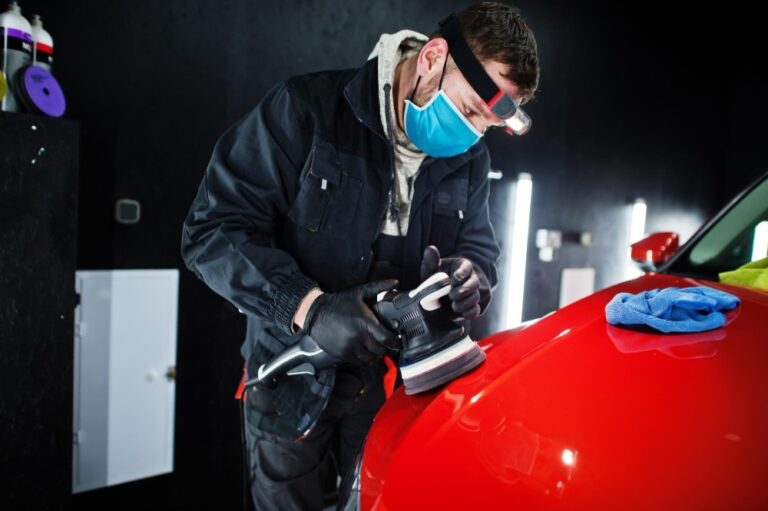

Top 5 PPF Brands in India (2026): Why GYEON is Winning Every Serious Detailing Studio’s Trust
The PPF market in India has matured significantly over the last few years. Customers are no longer asking “should I get PPF?” — they are asking “which PPF brand is actually worth the money?” And honestly, that is a far better question to be asking.
We have seen films yellow within 18 months. We have seen films peel at the edges in the first monsoon. And we have also seen GYEON PPF on cars that are 4+ years old, still holding perfect optical clarity with zero lifting. The difference is real, and it comes down to the quality of the base TPU, the topcoat technology, and how well the film has been engineered for real-world Indian conditions.
Here is our honest, no-brand-payment ranking of the top 5 PPF brands you should know about in 2026. Before we dive in — Paint Protection Film (PPF) is a thermoplastic polyurethane (TPU) film applied to your car’s painted surfaces. It protects against stone chips, minor scratches, bird drop acid, UV fade, and everyday abrasions. Think of it as an invisible shield. The difference between a good PPF and a poor one shows up clearly within 2 to 3 years of installation.
#1 GYEON
GYEON is a Korean brand that built its reputation on ceramic coatings before entering the PPF space — and that heritage shows clearly. Every GYEON Q² PPF film is engineered with the same obsession over polymer chemistry that makes their coatings so sought-after. The base TPU is high-grade, the adhesive system is pressure-sensitive with excellent edge conformability, and the topcoat is either hydrophobic or hydrophilic depending on the variant you choose.
What sets GYEON apart from every other brand on this list is the factory-embedded topcoat. You do not need to apply a ceramic coating separately. The film comes with protection already built in — saving the customer ₹8,000–₹15,000 in follow-up coating costs. That is not a small advantage.
GYEON Q² PPF Enhance Phobic
The entry into the GYEON PPF range, with a hydrophobic self-healing topcoat. The “60” refers to the 60-inch wide roll — ideal for full-panel coverage on most Indian cars. Water beads and rolls off aggressively. Self-healing activates with warm water or summer heat. Excellent optical clarity with no orange-peel distortion. Our most popular GYEON film for daily drivers — great protection, great clarity, accessible price point.
View GYEON Q² PPF Enhance Phobic →
GYEON Q² PPF Enhance Philic
Same GYEON ENHANCE TPU base as the Phobic, but with a hydrophilic (water-spreading) topcoat. Instead of beading, water sheets evenly across the surface — a self-cleaning behaviour that works exceptionally well in high-rain climates like Kerala, the Konkan coast, and Assam. Smearing and water spotting are dramatically reduced. If your city gets heavy monsoon or your car is parked outdoors overnight, the Philic topcoat is genuinely the smarter choice.
View GYEON Q² PPF Enhance Philic →
GYEON Q² PPF Protect+
GYEON’s top-tier film. High-grade TPU with superior impact absorption, UV-blocking chemistry, and a long-lasting hydrophobic topcoat. Outstanding clarity — genuinely invisible on light paints. Maximum self-healing performance. Designed for high-mileage drivers, highway commuters, and luxury vehicles where paint condition is non-negotiable. If you drive on expressways regularly or own a car above ₹20 lakh, Protect+ is the film to go with.
The complete GYEON PPF range — including HYBRID, MATTE, CARBON, and the 109-colour COLOR LINE variants — is documented at gyeon.co/ppf-collection.
Which GYEON PPF Should You Choose?
- Daily city driver, moderate budget → GYEON Q² PPF Enhance Phobic 60. Excellent protection, hydrophobic beading, great clarity at an accessible price.
- Rainy climate, coastal city, or you hate water spots → GYEON Q² PPF Enhance Philic. The hydrophilic sheeting effect is genuinely superior for high-rainfall regions. Your car looks cleaner after every drizzle.
- Luxury car, highway driver, or you want the absolute best → GYEON Q² PPF Protect+. No compromise on TPU quality, impact resistance, clarity, or longevity. If the paint matters, this is the one.
GYEON Protect+ vs XPEL Ultimate Plus — Head-to-Head
Let us directly compare GYEON’s premium Protect+ film against XPEL Ultimate Plus, the benchmark competitor at the same tier.
| Feature | GYEON Q² PPF Protect+ | XPEL Ultimate Plus | Our Take |
|---|---|---|---|
| Base film | Premium TPU, high-grade | Premium TPU, high-grade | Tied at this level |
| Topcoat | Excellent hydrophobic nano coat | Basic hydrophobic; most installers add ceramic coating separately | GYEON wins |
| Self-healing | Instant self-healing | Heat activated; reliable, industry-proven | GYEON wins |
| Optical clarity | Outstanding; zero orange-peel on direct comparison | Very good; slight peel visible on dark colours at certain angles | GYEON wins with huge margin |
| UV resistance | Built into film chemistry | Built into film chemistry | Tied |
| Warranty | 10 years | 10 years | Tied |
| Pre-cut patterns (India) | Available | DAP library | Tied |
| Price (full car install) | Competitive; better value-per-feature | Slightly higher due to brand premium | GYEON offers more features per rupee |
GYEON Enhance Phobic vs Entry-Level Films — XPEL / LLumar / SunTek
| Feature | GYEON Enhance Phobic | XPEL Prime Guard | LLumar PPF | SunTek Ultra |
|---|---|---|---|---|
| Hydrophobic topcoat | Factory-built-in | Basic | Not included — needs separate coating | Not included — needs separate coating |
| Self-healing | Yes — Excellent | Yes | Basic heat-activated only | Basic heat-activated only |
| Optical clarity | Excellent | Good | Average | Average |
| Edge conformability | Excellent, clean edges | Good | Acceptable | Acceptable |
| Warranty | 10 years | 5 years | 7 years | 10 years (manufacturer) |
#2 XPEL
XPEL practically invented the modern PPF category. Their Ultimate Plus film is a genuine benchmark — excellent optical clarity, reliable self-healing, and their Design Access Program (DAP) means pre-cut patterns for virtually every car sold in India, including recent launches like the Tata Curvv, Mahindra BE 6, and Kia Syros. If your GYEON-authorised studio does not have a pre-cut pattern for your specific car variant, XPEL usually does.
Where XPEL trails GYEON in 2026 is the integrated topcoat. XPEL Ultimate Plus has decent basic hydrophobic properties, but most premium installers add a separate ceramic coating on top — adding cost and an extra process step. GYEON’s Protect+ and Enhance Phobic films come with this built in from the factory. Brand recognition remains XPEL’s strongest asset — if resale value documentation matters to you, XPEL warranty cards carry real weight with buyers.
#3 STEK
STEK is the name you will hear in performance car circles and among detailers working on luxury German SUVs. Their DYNOshield gloss film has a unique gloss-enhancement effect that actually deepens the look of the paint underneath — a genuinely impressive result on deep blacks and navy blues. The DYNOmatt is one of the most consistent matte PPF films globally, with even satin sheen that does not develop tiger striping or uneven texture over time.
STEK’s limitation in India remains the installer network — trained STEK applicators outside the top 6–7 cities are still rare in 2026. Product quality is real; distribution is still building. For someone in Delhi, Mumbai, or Bangalore with a matte-painted car, STEK DYNOmatt is worth exploring seriously. For a glossy daily driver, GYEON Protect+ remains a more complete package.
#4 LLumar
Every Indian car owner knows LLumar from window tinting. They have been here for decades through Eastman Chemical, and that legacy gives them an installer network that no other PPF brand can match in India right now. You will find an authorised LLumar studio in Nagpur, Vizag, Mysore, Surat — cities where finding a GYEON or STEK installer is still a challenge.
The film itself is mid-range — adequate self-healing (heat-activated only), acceptable clarity, and reasonable durability. No factory hydrophobic topcoat means your installer should recommend a ceramic spray or coating on top. For a customer in a city with no access to premium brands, LLumar is a perfectly respectable choice. For someone in a metro with proper studio options, we would push them towards GYEON Enhance Phobic at minimum.
#5 SunTek
SunTek has long been the go-to for installers who need a decent film at competitive pricing. The Ultra variant has basic self-healing, acceptable clarity on lighter colours, and a 10-year manufacturer warranty. The real limitation? No hydrophobic topcoat out of the box, and long-term clarity retention is noticeably lower than premium films — some SunTek installs on black cars show visible silvering at the edges by year 4 or 5.
For a budget hatchback where the customer wants front-bumper protection and nothing more, SunTek makes sense. For any car above ₹12–15 lakh, the material cost difference between SunTek and GYEON Enhance Phobic 60 on a partial install is roughly ₹6,000–₹10,000. Stretched over 7 years of protection, that is not a decision worth penny-pinching on.
Full Brand Comparison — All 5 PPF Brands at a Glance
| Brand / Film | Self-Healing | Optical Clarity | Factory Topcoat | Warranty | India Network |
|---|---|---|---|---|---|
| GYEON Q² PPF Protect+ | Excellent | Outstanding | Hydrophobic (built-in) | 10 years | Growing fast |
| GYEON Enhance Phobic 60 | Very good | Outstanding | Hydrophobic (built-in) | 10 years | Growing fast |
| GYEON Enhance Philic | Very good | Outstanding | Hydrophilic (built-in) | 10 years | Growing fast |
| XPEL Ultimate Plus | Excellent | Very good | Basic only | 10 years | Strong |
| STEK DYNOshield | Very good | Outstanding | Good | 10 years | Limited |
| LLumar PPF | Basic | Average | None | 7 years | Excellent |
| SunTek Ultra | Basic | Average | None | 10 years | Moderate |
Our Final Word
The PPF market in India in 2026 has one clear leader — GYEON. Not because we are a GYEON stockist (though we are), but because the engineering genuinely backs it up. A factory-embedded hydrophobic or hydrophilic topcoat, self-healing TPU that works at real Indian ambient temperatures, outstanding optical clarity across all three variants, and a 10-year warranty the brand actually stands behind — this is a complete package that no other brand at a comparable price point currently matches.
Our recommendation stays simple: start with GYEON Q² PPF Enhance Phobic 60 if you want excellent value, step up to GYEON Q² PPF Protect+ if the car is above ₹15 lakh or sees serious highway kilometres, and consider the GYEON Q² PPF Enhance Philic if your city gets heavy rain. The self-cleaning hydrophilic effect during the monsoon is something you genuinely have to see to believe.
Frequently Asked Questions
What is the difference between GYEON PPF Enhance Phobic and Philic?
Both are entry-level GYEON PPF films built on the same TPU base. Phobic (hydrophobic) makes water bead and roll off — great for most Indian climates. Philic (hydrophilic) makes water spread evenly and sheet off the surface — better for coastal cities and high-rainfall regions like Kerala and the Konkan coast where mineral-rich rain causes water spotting.
Is GYEON Q² PPF Protect+ worth the extra cost over Enhance?
Yes, for the right use case. GYEON Protect+ uses a higher-grade TPU with better impact absorption and longer-lasting topcoat performance. If your car does regular highway driving where stone chip risk is higher, or if it is a luxury vehicle, the additional investment is well justified. For a city-only car doing modest kilometres, Enhance Phobic 60 is genuinely excellent and cost-effective.
Does GYEON PPF need a ceramic coating on top?
No — all three GYEON PPF products (Enhance Phobic 60, Enhance Philic, and Protect+) come with a factory-embedded topcoat. This is a key advantage over XPEL, LLumar, and SunTek where a follow-up ceramic coating is typically needed to achieve similar hydrophobic performance. Many customers still choose to apply GYEON Q² PPF EVO ceramic coating on top for added gloss depth — but it is an enhancement, not a requirement.
How long does GYEON PPF last?
GYEON Q² PPF carries a 10-year manufacturer warranty against yellowing, bubbling, cracking, and delamination. In our experience, the film holds excellent optical clarity well past the 5-year mark where cheaper films typically start showing signs of aging. Longevity is also tied to maintenance — using a proper PPF-specific shampoo like GYEON Q²M PPF Wash extends the film life significantly.
Which is better — GYEON PPF or XPEL in India?
For overall value-per-rupee in 2026, GYEON edges out XPEL — primarily because of the factory-embedded hydrophobic topcoat across all GYEON films. XPEL wins on pre-cut pattern library depth (DAP) and brand recognition. Both will protect your paint for 10 years when installed correctly by a trained applicator.
Is PPF worth it on an entry-level car?
For cars under ₹8 lakh, a partial PPF (bonnet + front bumper) combined with a good ceramic coating is typically the smarter spend. Full-car PPF makes the most financial sense on cars above ₹12 lakh where paint repair costs and resale value impact from stone chips is significantly higher. Even on a ₹6–7 lakh car, a partial front install with GYEON Enhance Phobic 60 is affordable and genuinely useful.