How to Clean Polishing Pads: Between Panels and After the Job
A polishing pad is a consumable, but a well-cared-for pad lasts much longer and works better than a neglected one. Pads clog quickly with spent polish, and a clogged pad does not just cut poorly: it can drag dried product across the paint. This guide covers how to clean foam, wool and microfiber pads while you work and how to deep-clean them afterwards. It complements our guide on how to use a car polishing machine.
Why pads need cleaning
Pads become clogged with spent polish during use. A clogged pad loses its effectiveness and can drag dried product across the paint, which is why we list a dirty pad among the common polishing mistakes. The reason differs by pad type:
- Foam pads are made of thousands of tiny hollow cells that give the polishing action as the pad spins. Wax and polish get caked in those cells, making the surface smooth and ineffective.
- Wool pads cut because of their fibres. Over a detail job the fibres become caked with polish and lose their effectiveness.
Cleaning pads while you work
You can keep polishing without stopping to change pads if you clean on the fly between panels.
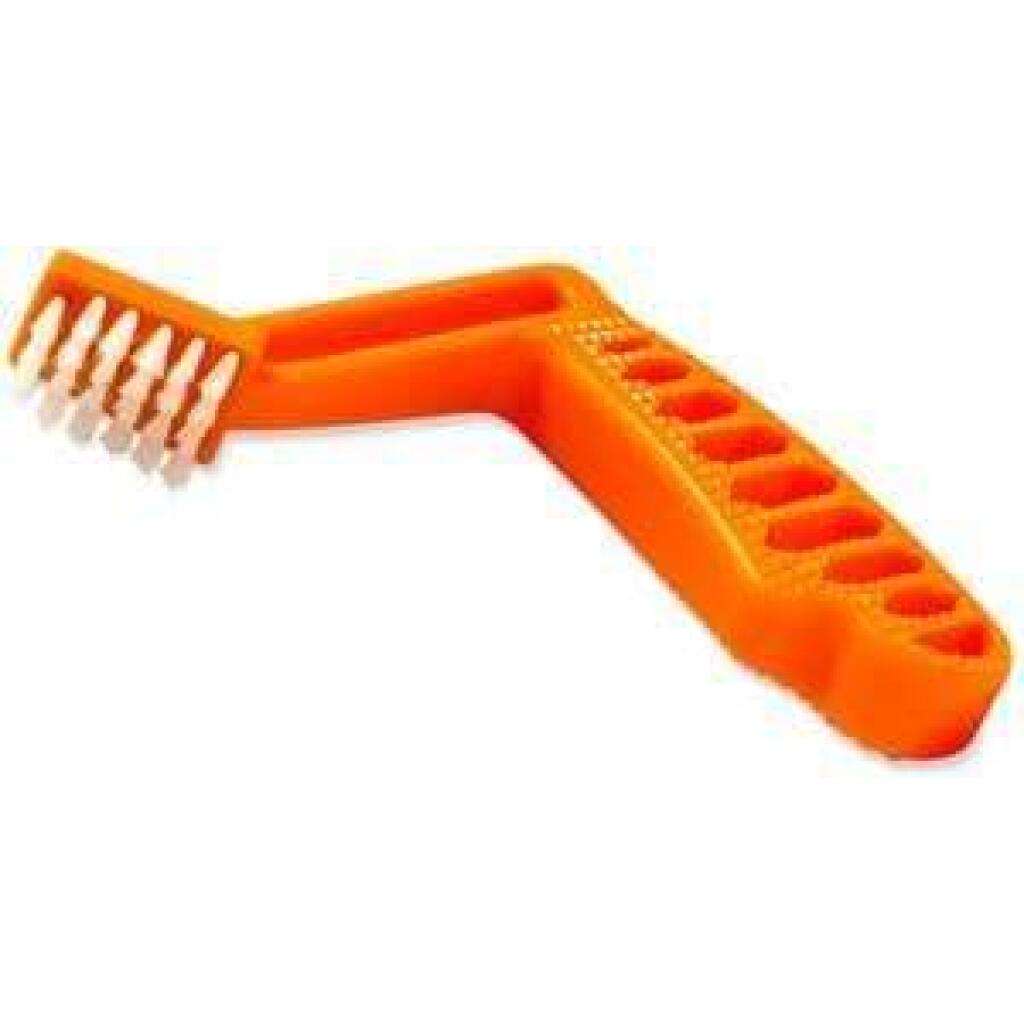
- For foam, use the Foam Pad Conditioning Brush. Hold the buffer pad side up and place the brush on the spinning pad. The stiff bristles pull caked and dried product out of the foam and restore its texture, and the angled handle keeps your hand away from the spinning buffer.
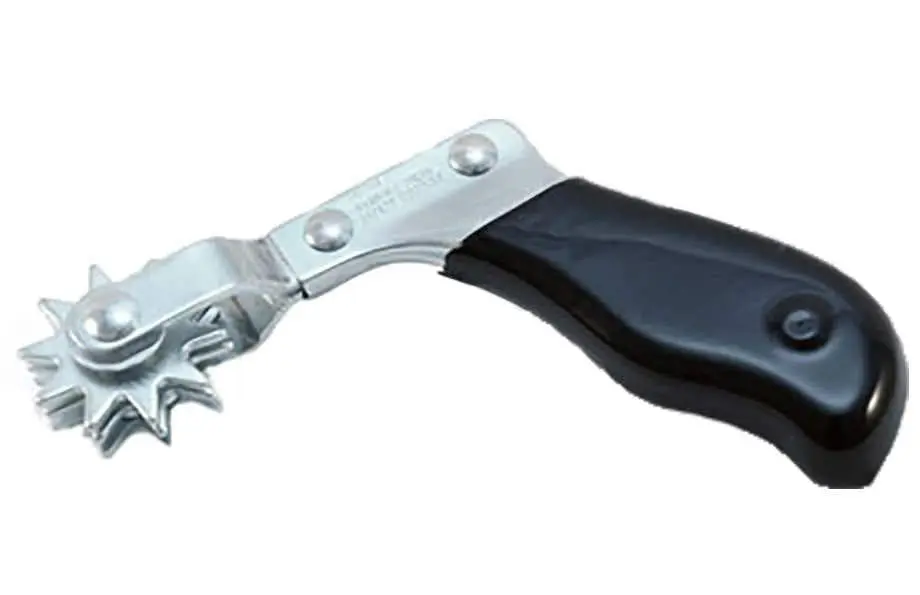
- For wool, use the Lake Country Wool Pad Spur Cleaning Tool. It has an angled handle and three spurring wheels that break up caked polish and separate the wool fibres. You can use it without removing the pad from the polisher: spin the pad at a low speed and hold the spur against it.
- For a simple hand brush, the Poka Premium Pad Cleaning Brush has medium-hard synthetic bristles (23 mm long) in a lacquered wooden handle, designed for cleaning foam, microfiber or wool pads gently but efficiently.
Deep cleaning after the job
A pad brush removes the surface build-up. A deep clean removes the product from inside the pad. Wash pads straight after the job, because dried product is harder to remove.
Use a pad cleaner, not soap
Soap or detergent can be hard to rinse fully out of a pad, and Lake Country points out that residual soap is reactivated the next time the pad is moistened by wax or polish. That can compromise the product’s effectiveness or leave streaks and residue on the vehicle. A dedicated pad cleaner avoids the problem.
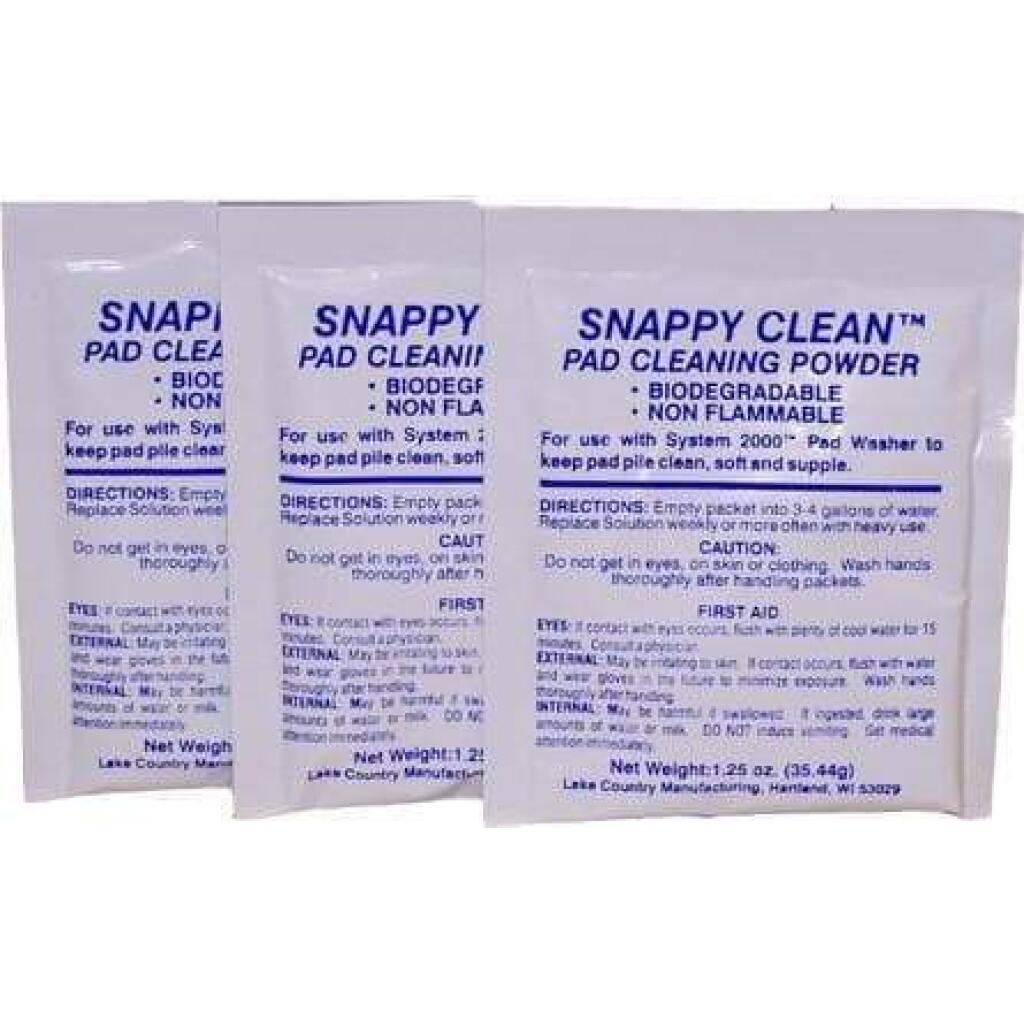
- The Lake Country Snappy Clean Pad Cleaning Powder (3 packs) is a concentrated citrus cleaning powder, not a soap, that releases wax and polish from foam or wool fibres after a few minutes of soaking. It dissolves in 3 to 4 gallons of water, which is enough to clean several pads. Drop the used pads in the mixture and agitate them, wait up to 15 minutes depending on how saturated they are, rinse with clean water and lay them out to dry. To speed up drying you can spin them dry in your buffer, though they may still need to be laid out to dry completely.
- The BLACKFIRE Citrus Pad Cleaner restores foam, wool and microfiber pads by removing product residues. BLACKFIRE notes that pads cleaned thoroughly after every use keep their texture and performance far longer, which saves money and gives better results.
Safety: Snappy Clean is biodegradable and non-flammable but is a citrus cleaner that can irritate skin with prolonged exposure, so wear gloves, and wear old clothes because it is powerful.
Store pads properly
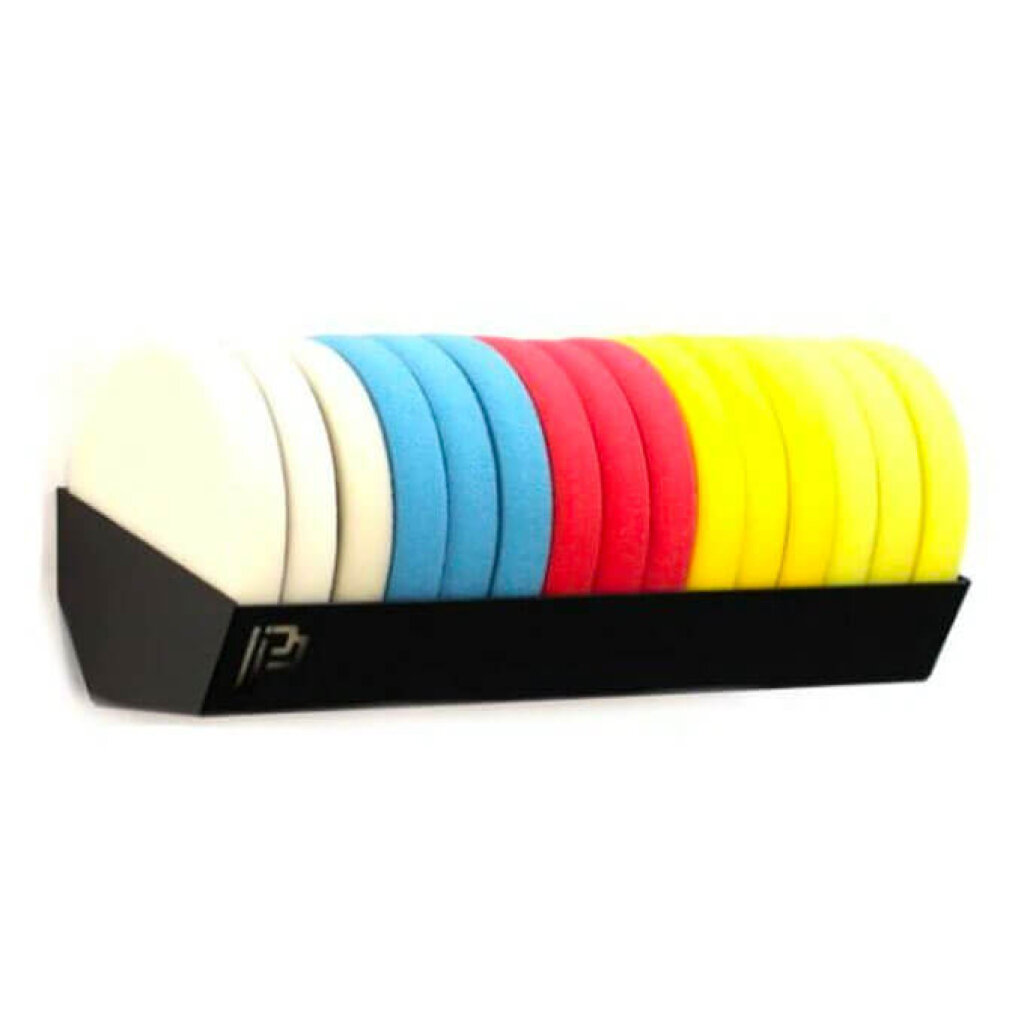
Clean, dry pads should be stored somewhere they will not pick up dust. The Poka Premium Polishing Pad Shelf holds pads from 83 to 165 mm in diameter, about 14 to 28 pads, so they stay sorted by size. See our guide to building a better polisher collection.
Do not replace pads too early
Lake Country’s advice is not to replace buffing pads every time they get caked with wax and polish: clean them and they will be as good as new. A pad that has been worn out or damaged is a different matter, so replace it when the foam breaks down or the backing fails. If you are building a pad collection, our starter kit guide shows which pads to start with.
Frequently Asked Questions
Why do polishing pads need cleaning?
Pads clog with spent polish during use. A clogged pad loses its effectiveness and can drag dried product across the paint. Foam pads work through tiny hollow cells that fill with product, and wool pads cut through their fibres, which become caked with polish.
How do I clean a polishing pad while I am polishing?
For foam, hold the buffer pad side up and press a foam pad conditioning brush against the spinning pad. For wool, spin the pad at a low speed and hold a wool pad spur against it, which can be done without removing the pad. Both let you keep working.
Can I wash polishing pads with soap?
It is best not to. Soap or detergent is hard to rinse completely out of a pad, and Lake Country notes that residual soap is reactivated by wax or polish the next time you buff, which can compromise the product or leave streaks. Use a dedicated pad cleaner instead.
How long should I soak pads in a pad cleaner?
With Lake Country Snappy Clean, wait up to 15 minutes depending on how saturated the pads are, then rinse with clean water and lay them out to dry. The powder dissolves in 3 to 4 gallons of water, which is enough to clean several pads.
Should I replace a pad when it gets caked with polish?
Not straight away. Lake Country's advice is to clean the pad rather than replace it every time it gets caked, and it will be as good as new. Replace a pad only when it is worn out or damaged.