
Top 10 Car Polishing Machines You Can Buy in India (With Specs & Uses)
You just spent an entire Sunday washing your car. It looks… okay. But there’s still that annoying swirl pattern catching the sunlight. And those light scratches near the door handle? They’re not going anywhere with a microfiber cloth.
Here’s the truth: hand polishing can only take you so far.
If you want a genuine mirror finish — the kind that makes people stop and stare — you need a polishing machine. But walk into the world of car polishers for the first time, and you’re immediately hit with a wall of confusing terms: DA, rotary, orbital, cordless, mini… it can feel overwhelming fast.
That’s exactly what this guide is for.
We’re going to break down the top 10 car polishing machines available in India right now — what they do, who they’re for, and what specs actually matter. Whether you’re a weekend warrior detailing your Nexon or a professional running a detailing studio, there’s something on this list for you.
Let’s get into it.
First, Let’s Talk Types — Because This Actually Matters
Before we jump into the list, you need to understand the two main categories of polishing machines. Get this wrong, and you’ll either end up with a machine that’s dangerous for a beginner or one that’s too underpowered for a pro job.
Rotary Polishers spin in circular motion. They generate more heat and friction, which means they cut through defects faster. Great for professionals. In the wrong hands? You can burn through clear coat in seconds.
Dual Action (DA) Polishers — also called random orbital polishers — move in two motions simultaneously: spinning and oscillating. This prevents heat build-up, making them dramatically safer for beginners while still delivering excellent results. Most professional detailers worldwide actually prefer DA machines for 90% of their work.
Now you’re ready for the list.
The Top 10 Car Polishing Machines in India
1. Rupes LHR 21 Mark III — The Gold Standard DA Polisher
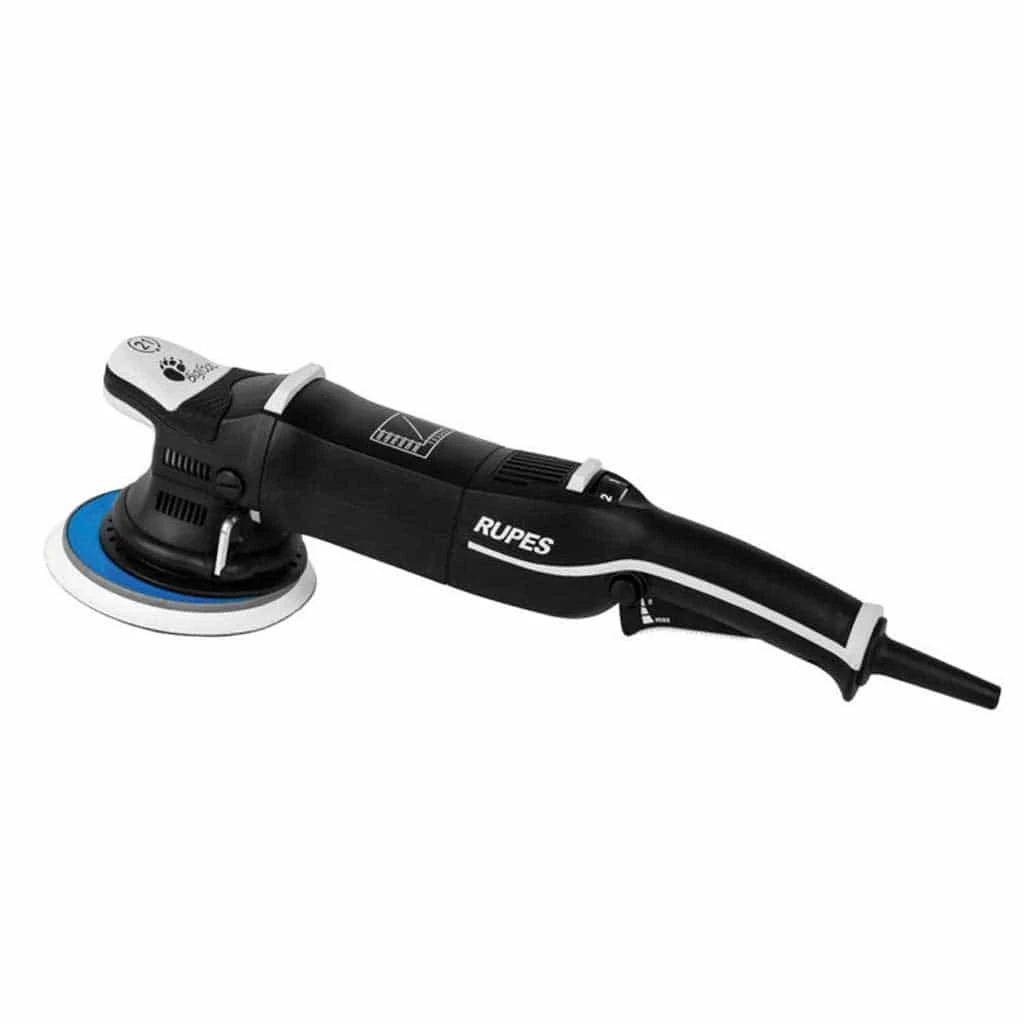
Type: Dual Action (Random Orbital) Orbit: 21mm Best For: Professional detailers and serious enthusiasts
If you’ve spent any time in the Indian detailing community, you’ve heard of Rupes. The LHR 21 Mark III is their flagship machine and arguably the most respected DA polisher on the planet.
What makes the 21mm orbit such a big deal? It’s over 250% larger than standard orbital tools. That massive orbit means more surface coverage per pass, more cutting power, and a higher-gloss finish — often in a single step. The Mark III version refines everything: a rubberized front grip, a progressive trigger that acts like a throttle for fine speed control, and a 9-meter cord so you can walk around a full-size SUV without hunting for another plug socket.
The electronic speed control module constantly monitors motor output and adjusts power delivery to maintain consistent speeds even as pad load changes. Translation: it does the thinking so you don’t have to.
The verdict: If budget isn’t a constraint and you want the best DA polisher available in India, this is it. Available at GreenZ Car Care’s polishing machine collection.
2. Rupes LHR 15 Mark III — The Professional’s Everyday Workhorse
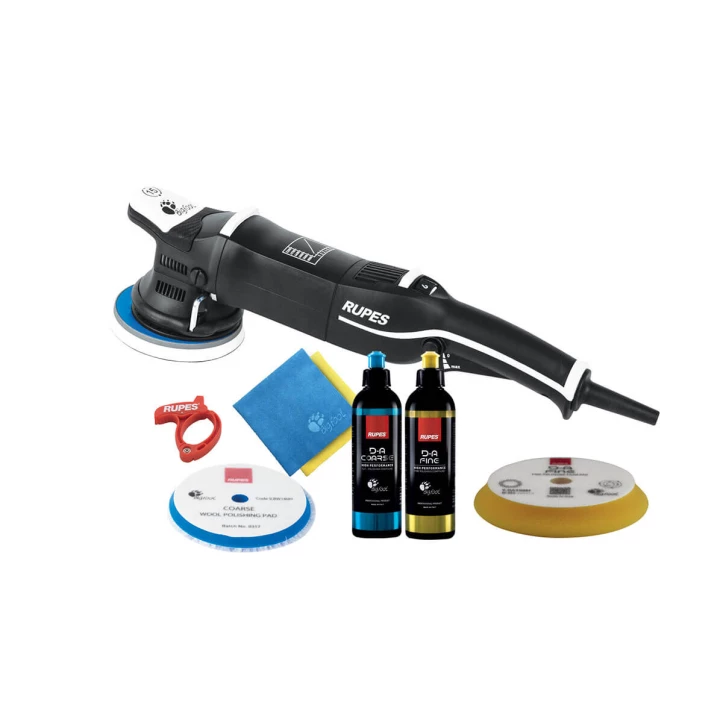
Type: Dual Action (Random Orbital) Orbit: 15mm Best For: Detailing professionals for everyday use
Here’s a fun fact: while the LHR 21 is what put Rupes on the map globally, the LHR 15 Mark III has quietly become the most popular choice among professional detailers in India.
Why? The 15mm orbit hits the sweet spot between aggressiveness and control. It’s more maneuverable on tighter body panels, roof curves, and around door handles. The 5-inch backing plate and 6-inch pad system give you flexibility across different vehicle shapes.
Same features as the 21 Mark III — progressive trigger, rubberized grips, electronic speed control, 9-metre cord — just in a more versatile package for daily professional use.
The verdict: If you’re detailing cars day in and day out and need a machine that handles every situation, pick this over the 21. Pair it with a good cutting compound and finishing polish from GreenZ’s car polishes and compounds range for best results.
3. Rupes LHR 21ES — The Accessible BigFoot Entry Point
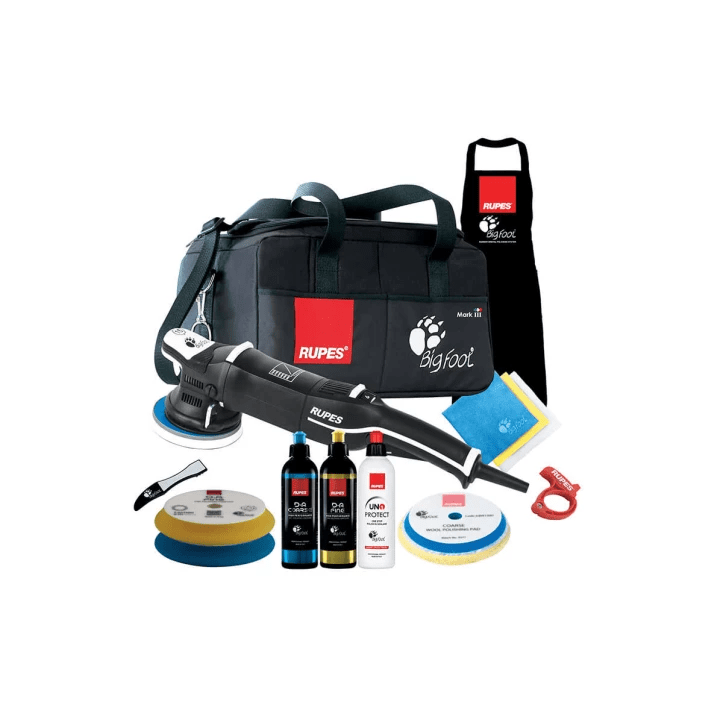
Type: Dual Action (Random Orbital) Orbit: 21mm Best For: Enthusiasts stepping up from beginner tools
The LHR 21ES is essentially the machine that started the BigFoot revolution. When it launched, the concept of a 21mm orbit polisher was revolutionary — nobody had seen a DA machine with that much cutting power that was still safe enough for a beginner to use.
It delivers the same core BigFoot performance at a more accessible price point compared to the Mark III. Electronic speed control module for consistent power, perfectly balanced body, and the iconic counterbalancing system that keeps vibration minimal even at high speeds.
The verdict: An outstanding entry point into professional-grade DA polishing without paying for the latest-generation refinements of the Mark III.
4. GreenZ Dual Action Polisher DM21
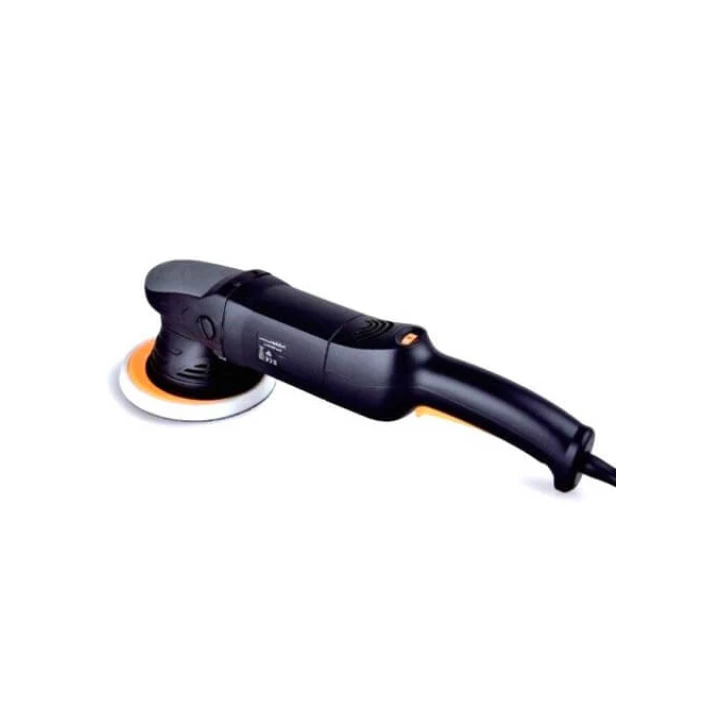
Type: Dual Action (Random Orbital) Orbit: 21mm Best For: Enthusiasts and detailers wanting pro-grade performance at a competitive price
This one deserves special attention because it’s built specifically with Indian detailers in mind. The GreenZ DM21 is a 21mm orbit DA machine designed for precision detailing, with an ergonomic housing and 6-speed settings that give you exceptional control.
The 21mm orbit increases the polishing footprint significantly compared to smaller DA machines, making it more productive — you cover more paint per pass, which means jobs get done faster without sacrificing quality. And like the Rupes machines, the orbital motion prevents heat build-up, so even if you’re new to machine polishing, the risk of burning through your clear coat is dramatically reduced.
The verdict: If you want BigFoot-level performance from a brand that truly understands the Indian market, the GreenZ DM21 is a smart choice. GreenZ designed their two-step polishing system specifically to pair with this machine for optimal results.
5. Rupes LHR 15ES — The Reliable Beginner-to-Pro Bridge
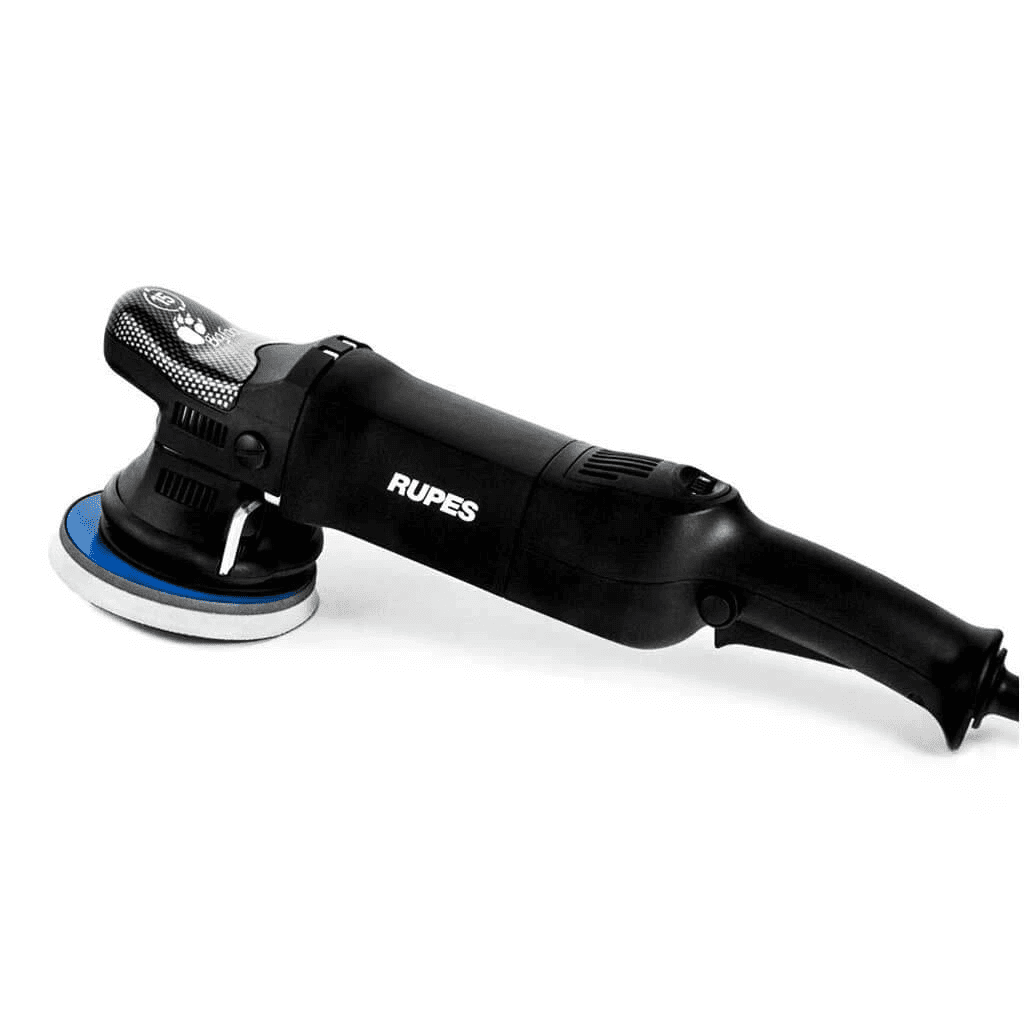
Type: Dual Action (Random Orbital) Orbit: 15mm Best For: Enthusiasts looking for an economical first DA polisher
The LHR 15ES is the first-generation 15mm BigFoot platform, and it remains a fan favourite precisely because it keeps things simple without cutting corners on quality.
The perfectly balanced machine body, quiet operation, and minimum vibration make it approachable for someone polishing their first car. But don’t mistake “beginner-friendly” for “underpowered” — the 15mm orbit with the 125mm backing plate still delivers professional-grade results.
The verdict: A great machine for someone buying their first serious polisher who doesn’t want to outgrow their tool in six months.
6. Rupes LHR 12E Duetto — The Dual-Purpose Specialist
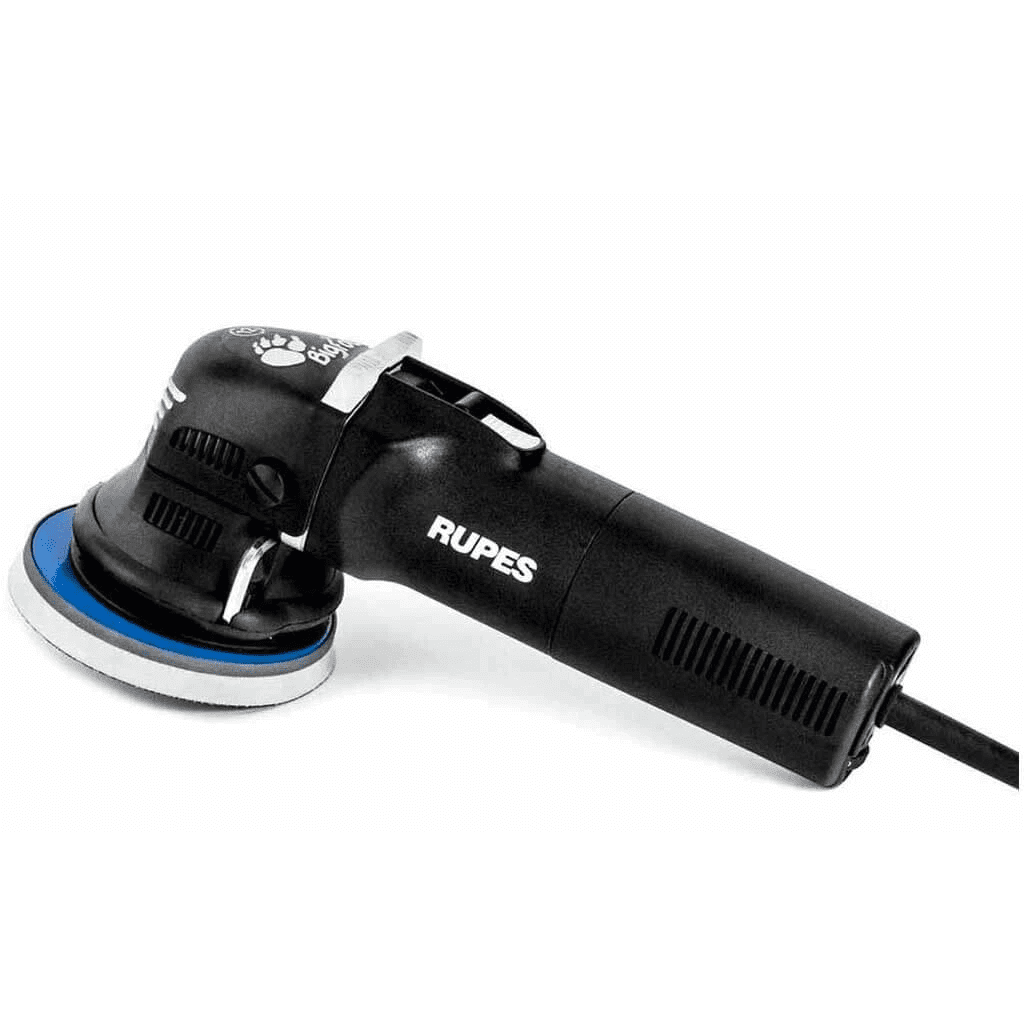
Type: Dual Action (Random Orbital) Orbit: 12mm Best For: Detailers who also do wet sanding
Now we’re getting into specialist territory. The LHR 12E Duetto isn’t just a polisher — it’s designed for wet sanding and polishing in one tool. The 12mm orbit creates a balance between polishing power, sanding ability, and precise control that a 21mm or 15mm machine simply can’t match.
One standout design detail: instead of a trigger, the Duetto uses a locking on/off switch. This means you can run the machine single-handedly — useful when you need your other hand for a spray bottle during damp sanding. Rubber accents, a built-in tool rest on the back of the body — Rupes has thought through every scenario.
The verdict: Not for everyone, but if wet sanding is part of your detailing process, this machine is a genuinely unique tool.
7. Rupes BigFoot LH 19E — The Professional Rotary
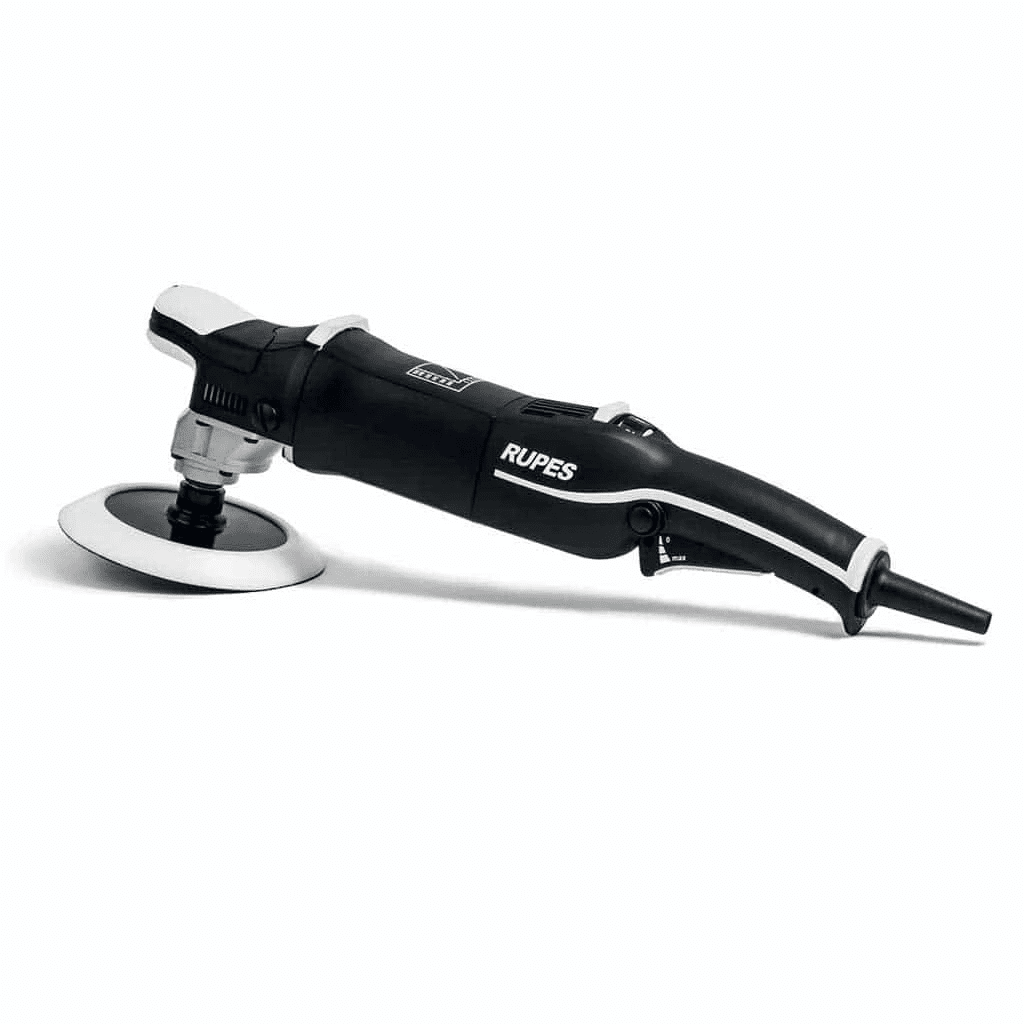
Type: Rotary Best For: Experienced professional detailers handling severe paint defects
Now we move into rotary territory. The Rupes LH 19E BigFoot is described as one of the most capable and maneuverable rotary polishers on the market — and that’s not marketing fluff.
The high-torque motor delivers serious cutting power for eliminating deep scratches, heavy oxidation, and defects on scratch-resistant clear coats that a DA machine would struggle with. The innovative D-loop handle lets you hold the polisher at multiple angles for precision and stability, while the soft-grip material absorbs vibration so your hands don’t turn to jelly after an hour’s work.
The verdict: This is a professional tool that demands experience. If you’re new to machine polishing, start with a DA polisher first. If you know what you’re doing, the LH 19E is exceptional. Pair it with GreenZ’s Nano Polishing System for Rotary for precision work on intricate areas.
8. Flex PE 14-2-150 — German Engineering in a Rotary
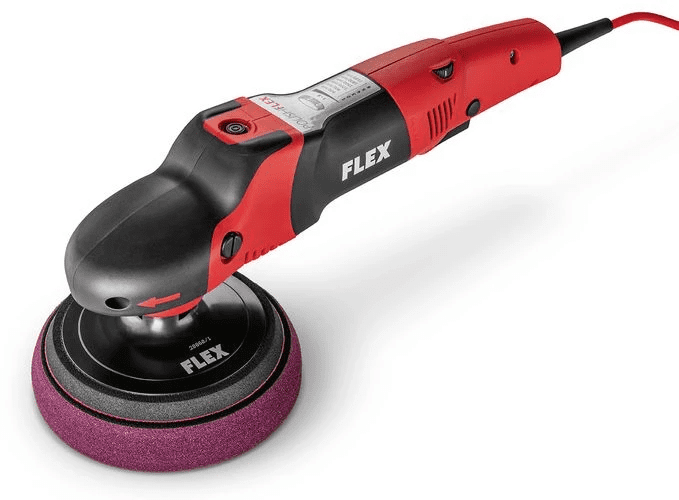
Type: Rotary Power Input: 1400W Best For: Professional detailers who demand precision control
Flex is one of the most respected professional tool brands in the world, and the PE 14-2-150 is their flagship rotary polisher. Germans don’t do things by half, and this machine proves it.
The microprocessor electronics manage stepless speed selection, constant-speed maintenance via tachogenerator feedback, overload protection, restart protection, and temperature monitoring — all simultaneously. The motor cools efficiently through optimized airflow, and the planetary + angular gear combination keeps noise to a minimum while reducing vibration. A continuous speed control trigger gives you a smooth, progressive start at 380 RPM before ramping up to 2100 RPM at full tilt.
The verdict: If the Rupes LH 19E is a performance sports car, the Flex PE 14-2-150 is a German luxury sports car. Different flavour, same elite tier.
9. Rupes BigFoot Nano iBrid — The Ultimate Mini Polisher
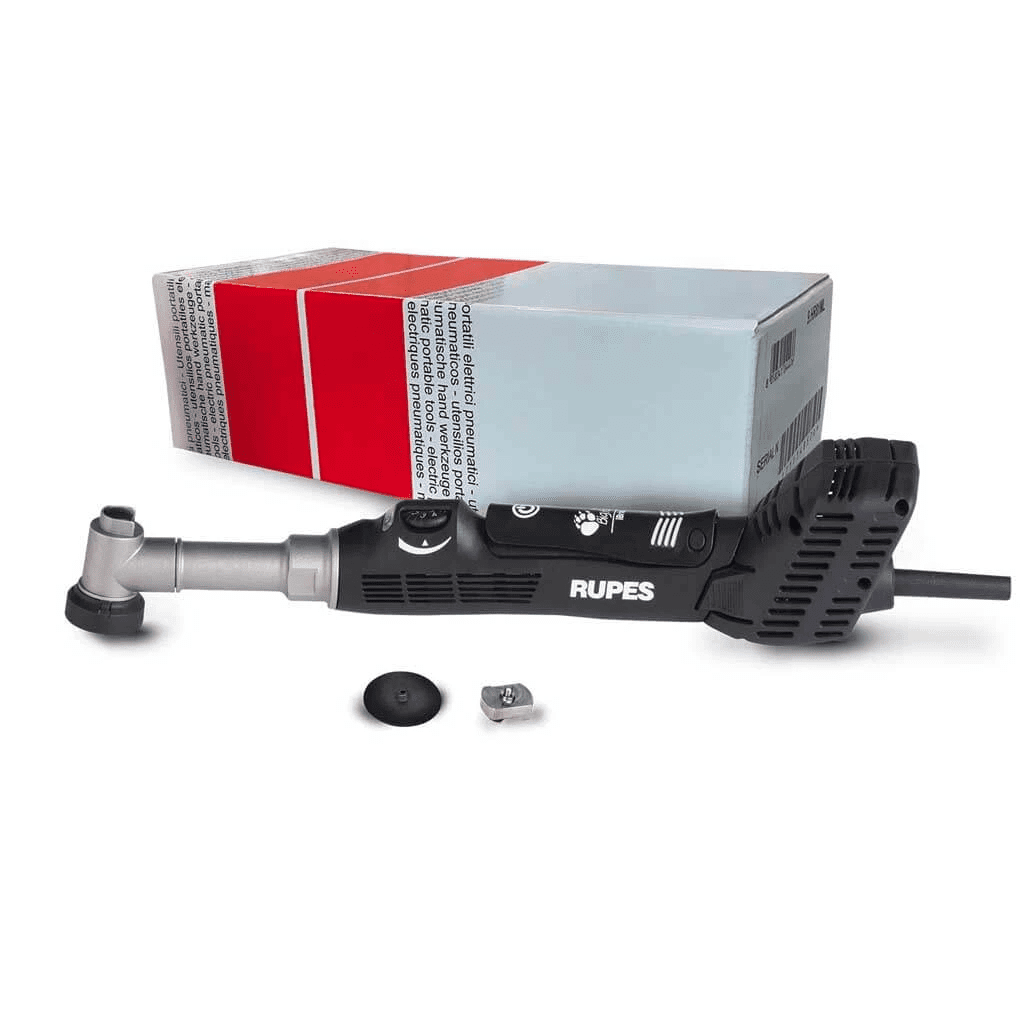
Type: Cordless / Dual Action (3mm & 12mm orbital) + Rotary Best For: Detail work, interior polishing, small panels, tight spaces
This machine is genuinely unlike anything else on this list. The Rupes Nano iBrid is a compact, cordless mini polisher that can be configured as a 3mm random orbital, a 12mm random orbital, or a rotary — with a single click to switch between them. You can also run it on battery or plugged in for continuous operation.
That versatility makes it extraordinary for detail work: polishing around door handles, on pillars, inside door jambs, on wheels, on interior leather and plastic trim. It even has a protective ring for safe use in confined spaces. For the professional detailer, this isn’t a replacement for your main polisher — it’s the tool you reach for when your main polisher can’t fit.
The verdict: A genuine innovation. If you run a detailing studio, this belongs in your kit. Pair it with GreenZ Micro Polishing Pads for precision results on intricate areas.
10. Flex PXE 80 — The Cordless Mini That Does It All
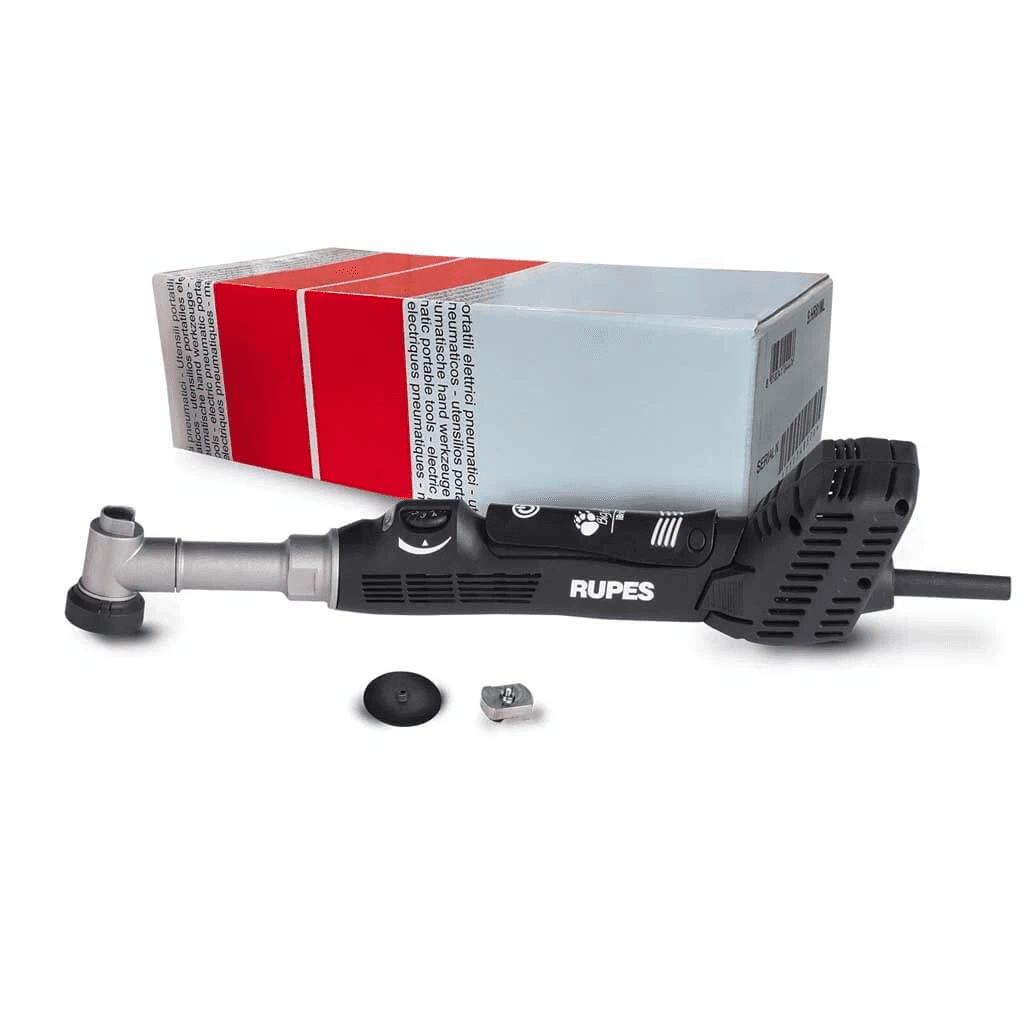
Type: Cordless Mini Polisher (Rotary + 3mm orbital + 12mm orbital) Max Pad Size: 80mm Best For: Tight spaces, interior detailing, mobile detailers
The Flex PXE 80 is the only mini polisher on the market with a protective ring designed specifically for safe use in small areas — think interior trim, tyre sidewalls, and narrow body sections. Like the Rupes Nano, it offers three interchangeable movement modes: rotary, 3mm orbital, and 12mm orbital — all switchable with a single click.
Four adjustable speed levels, a progressive switch with lock for smooth starting, a soft-grip fastening area for ergonomic handling, and an Electronic Management System (EMS) that protects the machine and extends its lifespan. Being cordless, it’s also a dream for mobile detailers who work outside a studio environment.
The verdict: Arguably the most practical mini polisher available in India today. If you’re a mobile detailer or need serious precision capability, this is the one.
Which Machine Should YOU Choose?
Here’s a simple way to think about it:
You’re a first-timer or DIY enthusiast: Start with a DA polisher — the Rupes LHR 15ES or the GreenZ DM21 are both excellent entry points. The orbital motion protects your paint while you learn technique.
You’re a professional running a studio: The Rupes LHR 15 Mark III or LHR 21 Mark III should be your main machine. Add the Flex PE 14-2-150 rotary for heavy correction work and the Rupes Nano iBrid or Flex PXE 80 for detail areas.
You do wet sanding: The Rupes LHR 12E Duetto is built for you.
You’re a mobile detailer: The Flex PXE 80’s cordless freedom makes your life significantly easier.
Don’t Forget the Consumables
A polishing machine is only as good as the pads and compounds you run through it. This is something Indian detailers often overlook — they’ll invest in a great machine and then pair it with mediocre pads that limit the results.
GreenZ’s two-step polishing system was specifically designed and tested with their machines to deliver the best paint correction results in the shortest time. From heavy-cut foam pads for serious defect removal to ultra-soft finishing pads for that final swirl-free gloss, the right consumables are what separate a good result from a jaw-dropping one.
And when you’re done polishing? Protect the finish with a quality ceramic coating, paint sealant, or carnauba wax from GreenZ’s paint protection range — because all that work deserves to last.
The Bottom Line
The Indian car detailing market has evolved dramatically over the last decade. The machines available here today — from Rupes BigFoot to Flex Germany to GreenZ’s own lineup — are genuinely world-class. You no longer have to compromise on quality.
The right polishing machine will transform both your results and your enjoyment of the detailing process. Once you’ve removed a set of swirl marks with a DA polisher and seen the paint transform in front of your eyes, you’ll never go back to hand polishing.
Explore the full range of car polishing machines at GreenZ Car Care — and if you’re not sure which one is right for your situation, their team of detailing experts is there to help you choose.
Your paint deserves better than a cloth and a prayer. Give it the machine it deserves.
Frequently Asked Questions (FAQ)
1. What is the difference between a DA polisher and a rotary polisher?
Great question — and one that trips up a lot of first-timers. A rotary polisher spins in one direction only, like a drill. That single-motion spin generates a lot of heat and friction, which is powerful for removing deep scratches and heavy paint defects. The downside? If you hold it in one spot too long or use the wrong technique, you can burn right through the clear coat. It’s a tool for experienced hands.
A DA (Dual Action) polisher, on the other hand, moves in two directions at once — spinning and oscillating simultaneously. This disperses heat, makes it nearly impossible to damage paint by accident, and still delivers excellent results. For 90% of detailing tasks, a DA polisher is the smarter, safer choice — even for professionals.
2. Can a beginner use a car polishing machine at home?
Absolutely — as long as you start with the right machine. A DA polisher like the GreenZ DM21 or the Rupes LHR 15ES is designed to be beginner-friendly without sacrificing results. The orbital motion means the machine naturally wants to avoid staying in one spot, which protects your paint while you’re still building technique.
Avoid starting with a rotary polisher. Save that for after you’ve built confidence and understand how different paints and coatings respond to machine polishing.
3. How often should I polish my car?
This depends on your car’s condition and how much you care about paint perfection. As a general guide:
Light maintenance polish (to remove minor swirls and boost gloss) — once or twice a year is plenty for most car owners. Paint correction (heavy defect removal) — only when genuinely needed, typically every 2–3 years, because each polish session removes a thin layer of clear coat. Polish too often and you’ll eventually run out of clear coat to work with.
The smarter strategy? Polish properly when needed, then protect the finish with a good ceramic coating or paint sealant from GreenZ’s paint protection range so you’re polishing less frequently over time.
4. What polishing pad should I use with my machine?
Pad selection depends on what you’re trying to achieve. As a simple rule of thumb:
Heavy-cut foam or microfiber pads are for serious defect removal — deep scratches, heavy swirl marks, oxidation. They work fast but leave behind micro-marring that needs to be refined. Medium-cut pads handle moderate swirls and are often used for one-step polishing. Soft finishing pads are used in the final step with a finishing polish to bring out maximum gloss and leave zero marring.
Always match your pad to your compound. GreenZ’s two-step polishing system takes the guesswork out of this — the system is designed so the pads and compounds work together optimally.
5. Is a cordless polisher as powerful as a corded one?
For mini polishers — like the Rupes Nano iBrid and the Flex PXE 80 — yes, battery technology has reached a point where cordless performance is genuinely comparable to corded for detail work on small panels and tight areas.
For full-size polishers, corded machines still hold the edge in sustained power output. Battery packs can throttle performance as they drain, especially during heavy correction work. So for a detailing studio where you’re polishing for hours at a time, stick with corded for your main machine and use cordless for detail work.
6. What speed setting should I use on my polishing machine?
Speed settings on polishing machines are typically numbered 1–6. Here’s a general starting point:
Speeds 1–2 — Spreading compound or polish across the panel before working it in. Speeds 3–4 — The main working range for most polishing tasks with DA machines. Speeds 5–6 — Maximum aggression for heavy defect removal or when using a rotary for serious paint correction.
Start lower than you think you need. You can always increase speed, but you can’t undo burnt paint. When in doubt, refer to the product instructions for your specific compound — GreenZ includes recommended speed settings with their polishes.
7. Can I use a car polishing machine on matte or satin paint?
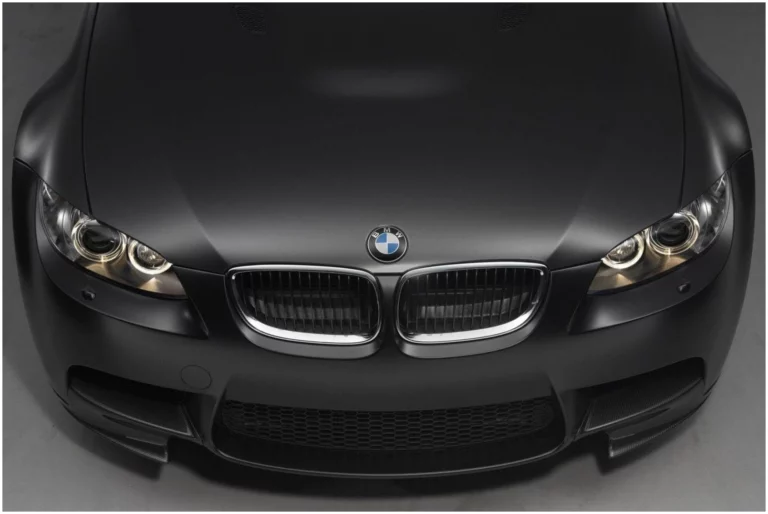
This is a common question — and the answer requires care. Matte and satin finishes don’t have the same clear coat structure as gloss paint, and standard polishes will add gloss to them, ruining the finish.
If your car has matte or satin paint, avoid conventional polishing compounds entirely. There are specific matte-safe maintenance products that clean and protect without adding shine. When in doubt, speak to a professional detailer before running any machine over a matte finish.
8. Do I need to clay bar my car before polishing?
Yes — almost always. Clay barring removes bonded surface contaminants like industrial fallout, tar, and brake dust that washing alone can’t remove. If you polish over a contaminated surface, you’re essentially grinding those particles into your paint.
After washing, run your fingers over a panel. If it feels rough or gritty like sandpaper, it needs clay. Only once the paint feels smooth and clean should you move on to machine polishing. Check out GreenZ’s detailing tools and accessories range for clay bars and surface prep tools to use before you polish.
9. What’s the difference between polishing and waxing?
People mix these up constantly — they’re actually very different processes.
Polishing is a corrective process. A polish contains mild abrasives that remove a microscopic layer of clear coat to eliminate scratches, swirl marks, and oxidation. It restores the paint’s surface.
Waxing (or applying a paint sealant or ceramic coating) is a protective process. It lays a sacrificial barrier over the paint to protect it from UV, water, dirt, and light scratches. Wax doesn’t fix defects — it protects the finish you’ve already created.
The correct order is always: wash → decontaminate → polish (if needed) → protect. Skipping straight to wax on defective paint just locks in the swirl marks under a glossy layer.
10. Where can I buy professional car polishing machines in India?
GreenZ Car Care stocks a curated range of professional-grade polishing machines in India — from the full Rupes BigFoot lineup to Flex and their own GreenZ machines. You can browse and buy the complete range on their polishing machines collection page. If you’re unsure which machine is right for your needs, their team can help you choose based on your budget, skill level, and the type of detailing work you do.