
Top 5 Microfiber Towel Types Every Car Owner Must Have
Let’s be real — most car owners are using the wrong towel for the job. A single old cotton cloth doing drying, polishing, and glass cleaning? That’s a recipe for swirl marks, streaks, and a finish that never quite looks right. The truth is, different detailing tasks demand different towel types, and once you get this right, the difference shows immediately. Here’s everything you need to know about the 5 types of microfiber towels that should be in every car owner’s kit.
1. The Drying Towel — Your Post-Wash Essential
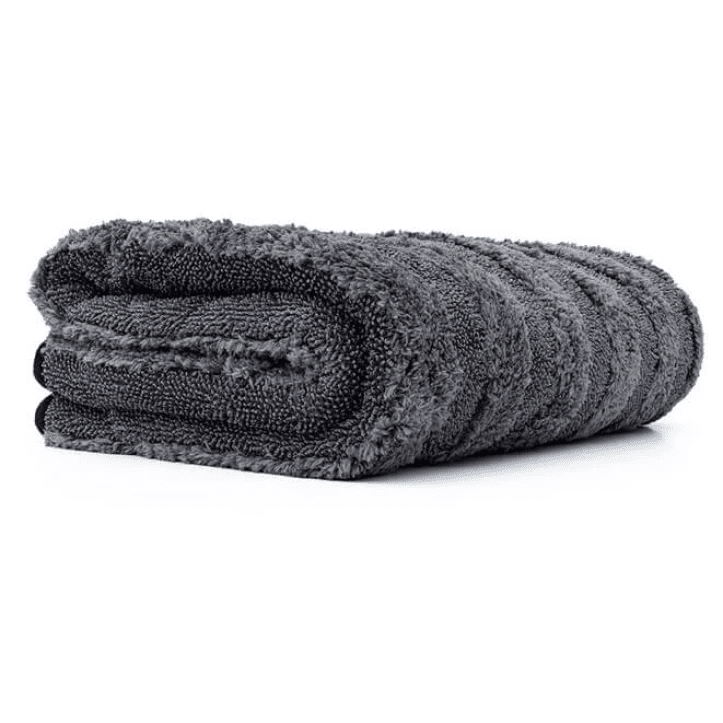
After a wash, every minute you leave water sitting on your car’s paintwork is a minute for water spots to form. A dedicated drying towel isn’t optional — it’s the first line of defence against mineral deposits and dried water marks that can dull even a fresh wax job.
What you’re looking for here is a large, thick, ultra-absorbent towel with a high GSM (grams per square metre). The best drying towels use a twisted pile or waffle weave construction that maximises surface area contact and pulls moisture off the paint in one or two smooth passes. A standard 40×40 cm cloth simply won’t cut it — you want something big enough to cover the bonnet in broad, overlapping strokes.
Best specs to look for: GSM 1000–1200+, Twisted Pile or Waffle Weave, Large Format
Pro Tip: Always use a slightly damp drying towel — a bone-dry towel drags micro-particles across the paint. Lightly mist it with clean water before you start for a glide that’s safer on your clear coat.
The GreenZ Supreme Drying Towel (1200 GSM) features alternating stripes of twist loop and soft plush — a combination that makes it one of the safest and most efficient drying towels available. It holds an extraordinary amount of water without dripping back onto the surface.
2. The Glass Towel — Streak-Free Every Single Time
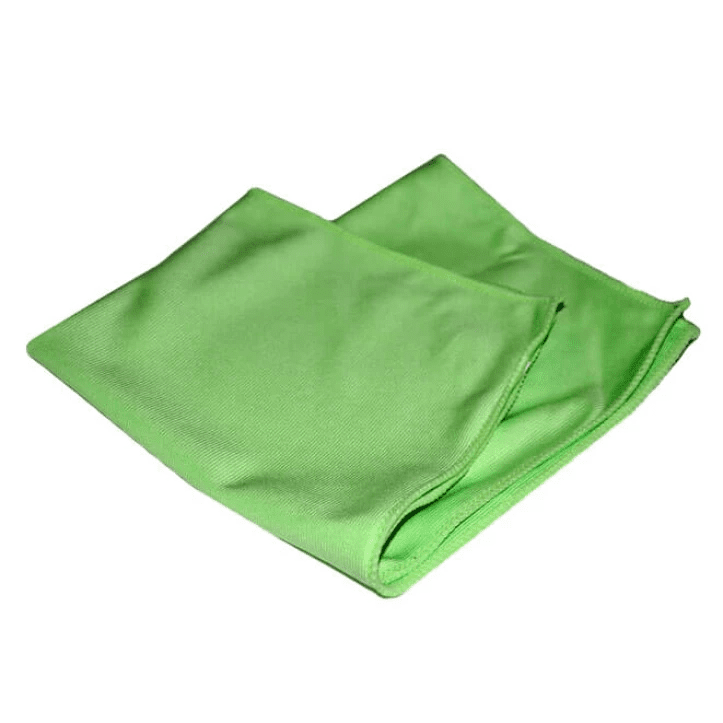
Nothing is more frustrating than cleaning your windshield only to find it smeared in streaks the moment sunlight hits it. Standard microfiber towels — even clean ones — are not designed for glass. They leave behind tiny fibres or redistribute cleaning residue because their pile is too loose and absorbent.
A dedicated glass towel has a tight, flat weave made from a finely split polyester/polyamide blend. This dense construction captures and removes dirt, grease, fingerprints, and glass cleaner residue without leaving any lint or streaks. It’s lightweight and slightly stretchy, which makes it easy to work into corners and around mirrors.
Best specs to look for: GSM 250–350, Flat Tight Weave, Lint-Free
Pro Tip: Keep your glass towels strictly for glass only. One accidental use on a waxy surface and the towel is contaminated. Colour-coding your towels by task is the single easiest habit to build in car detailing.
The GreenZ Premium Glass Towel (290 GSM, 30×30 cm) is a flat woven towel built specifically for glass, chrome, and polished metals. Its extra-tight weave delivers that crystal-clear, streak-free finish that makes the difference between a clean car and a truly detailed one.
3. The Plush Buffing Towel — Paint-Safe Polish Removal
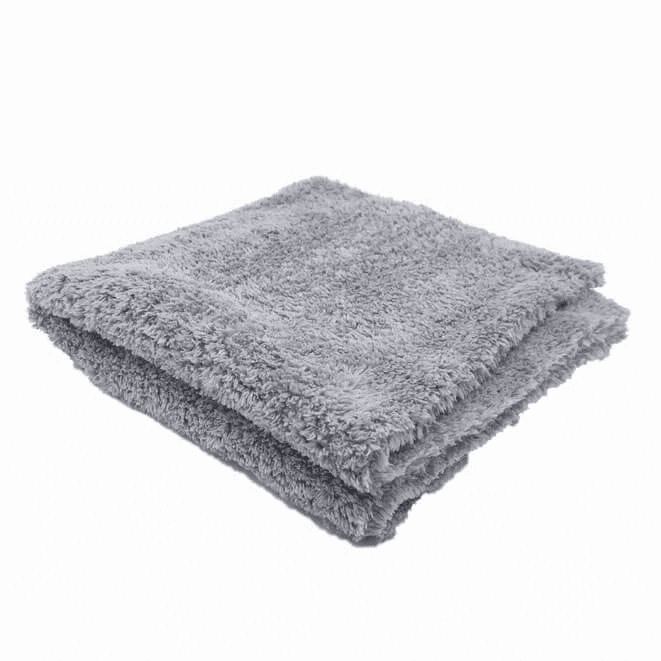
Polishing and waxing are where the magic happens — but only if you remove the residue properly. Using a rough or low-quality towel to buff off wax is one of the most common ways car owners accidentally introduce swirl marks and light scratches. This is the last step in your detailing process, and it deserves the right tool.
A high-quality plush buffing towel has a deep, long-pile microfiber on both sides. The long fibres lift wax or polish residue away from the surface rather than rubbing it across the paint. Many serious detailers also opt for edgeless towels here — the ultrasonic or laser-cut edging means there are no stitched borders to catch on the clear coat.
Best specs to look for: GSM 420–800+, Deep Pile Both Sides, Edgeless Preferred
Pro Tip: Flip your buffing towel to a fresh side halfway through the panel. Once one side is loaded with wax residue, continuing to use it just redistributes product rather than removing it.
Two excellent options from GreenZ for this task: the GreenZ Breeze 450 Ultra Plush Towel (450 GSM, edgeless) is a fan favourite for everyday wax and sealant removal, with high pile on both sides and zero drag. For those who need a more versatile option, the GreenZ Smart Edgeless Polish Towel handles compound and paste wax removal equally well thanks to its closed-loop pearl weave construction.
4. The Suede Microfiber — Precision Coating Application
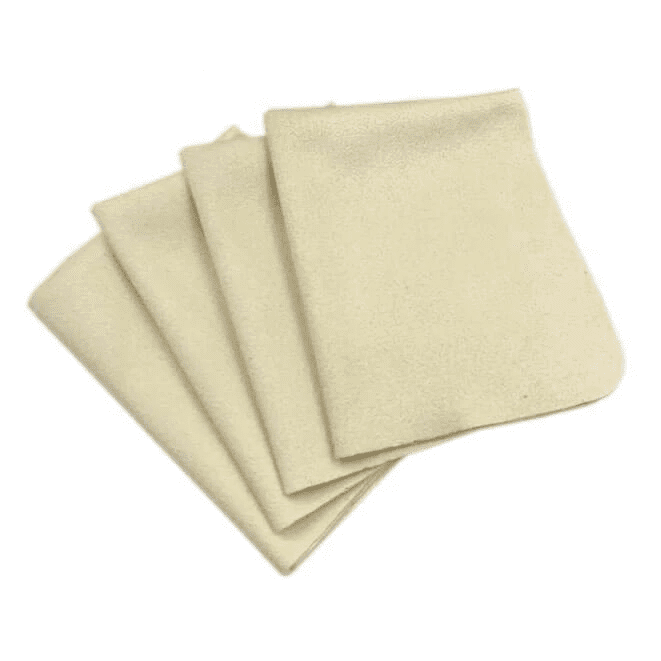
If you’re applying a ceramic coating, a paint sealant, or any kind of high-performance protective product, you need a suede microfiber — full stop. Regular plush towels are too absorbent and will soak up your expensive product before it even has a chance to bond with the paint. Suede towels apply products evenly and thinly, which is exactly what ceramic coatings require.
Unlike regular microfibers, suede towels have a completely flat, smooth surface — they feel genuinely similar to real suede leather. There’s no pile, no texture, just a silky-smooth fabric that spreads product in a precise, controlled layer. Many professional-grade suede towels are also hemless, edge to edge, so there’s nothing to catch or scratch during application.
Best specs to look for: Flat Suede Weave, Hemless/Edgeless, Low Absorption
Pro Tip: After ceramic coating application, consider dedicating the suede towel to that use only. Ceramic residue cures hard and can make towels scratchy over time. Don’t cross-contaminate your good towels.
The GreenZ Suede Microfiber Towel is designed specifically for professional detailers applying coatings and high-end protective products. Its smooth, flat weave and hemless edges make it the precision tool that ceramic coating application demands.
5. The All-Purpose Towel — Your Daily Driver
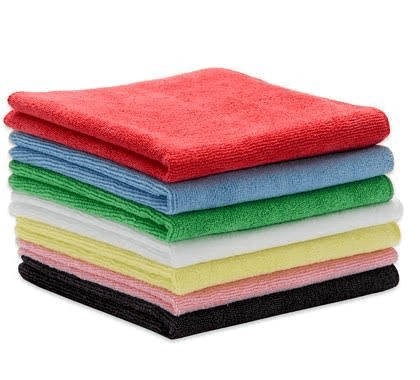
Not every task needs a specialised towel. Wiping down interior surfaces, removing dust after a drive, applying quick detailer spray between washes, cleaning door jambs — for all of this, you need a reliable, mid-weight all-purpose microfiber that you can grab without worrying about reserving it for a specific job.
A good all-purpose towel sits in the 350–450 GSM range with a standard sewn or edgeless border. It should be soft enough for exterior painted surfaces but sturdy enough to handle interior trim, plastics, and rubber. This is the towel you’ll reach for most often — which means you should have several of them, and replace them more frequently than your specialist towels.
Best specs to look for: GSM 350–450, 80:20 Polyester:Polyamide Blend, Interior & Exterior Safe
Pro Tip: Even with all-purpose towels, assign dedicated colours to interior and exterior use. Cross-contaminating your interior towels with tyre dressing and then wiping your dashboard is a mistake you only make once.
The GreenZ All Purpose Microfiber Towel (400 GSM, 40×40 cm) is the workhorse of the GreenZ range. Built on an 80:20 polyester/polyamide blend, it’s designed for consistent, reliable performance across virtually every detailing task you’d throw at it day to day.
Quick Comparison: Which Towel Does What?
| Towel Type | GSM Range | Best For | Weave Type |
| Drying Towel | 1000–1200+ | Post-wash drying | Twisted Pile |
| Glass Towel | 250–350 | Windows, chrome, mirrors | Flat Tight Weave |
| Plush Buffing Towel | 420–800 | Wax & polish removal | Deep Pile / Edgeless |
| Suede Microfiber | ~400 | Ceramic coating application | Flat Suede |
| All-Purpose Towel | 350–450 | Interior, trim, quick details | Standard Plush |
One More Thing: Look After Your Towels
Even the best microfiber in the world becomes useless — or worse, abrasive — if you wash it incorrectly. Always wash new towels before first use to remove factory fibres. Never use fabric softener — it clogs the microfibres and destroys absorbency. Keep microfiber away from bleach, and never tumble dry on high heat. Microfiber is essentially a fine plastic — high heat melts and fuses the fibres together, turning a soft towel into something closer to sandpaper.
Most importantly, keep dirty towels separate from clean ones, and keep task-specific towels apart from each other. It takes just one cross-contamination incident — a towel that’s touched a wheel and then been used on paint — to create scratches you’ll need to polish out. Colour-coding is the simplest system and it genuinely works.
Build Your Towel Kit the Right Way
You don’t need dozens of towels — but you do need the right five. One for drying, one for glass, one for buffing, one for coating work, and a handful of all-purpose workhorses. Get these right and your detailing results will improve immediately, every single wash.
Browse the full range at the GreenZ Microfiber Towel Collection and pick the ones that match your detailing routine.
FAQs
1. Can I use the same microfiber towel for drying, polishing, and glass cleaning?
No — and this is one of the biggest mistakes car owners make. Each detailing task requires a specific weave, GSM level, and absorption capacity. A drying towel is designed to hold large amounts of water, while a glass towel has a tight flat weave for streak-free clarity. Using one towel for everything increases the risk of swirl marks, streaking, and cross-contamination. For best results, always dedicate towels to specific tasks and colour-code them.
2. What GSM microfiber towel is best for car detailing?
It depends on the job:
- 1000–1200+ GSM → Best for drying
- 420–800 GSM → Ideal for wax and polish removal
- 350–450 GSM → Perfect for all-purpose use
- 250–350 GSM (flat weave) → Best for glass
Higher GSM doesn’t always mean better — the weave type matters just as much as thickness. Choose based on task, not just weight.
3. How many microfiber towels should I own for proper car care?
At minimum, every car owner should have:
- 1 large drying towel
- 1 dedicated glass towel
- 2 plush buffing towels
- 2–4 all-purpose towels
- 2 suede towels (if applying ceramic coating)
Having multiple towels prevents product overload and reduces the risk of scratching your paint.
4. How do I wash microfiber towels without ruining them?
Wash microfiber separately using a mild liquid detergent and cold or warm water. Never use fabric softener or bleach — they clog and damage the fibres. Air dry or tumble dry on low heat only. High heat melts microfiber strands, reducing softness and absorbency. Proper care can make quality microfiber towels last for years.