
Detailing Brushes Explained: Soft, Stiff and Rubber, and Which to Use Where
A detailing brush looks like a simple tool, but the wrong one can scratch a surface that the right one would clean safely. Brushes differ in bristle stiffness, bristle material and handle, and each suits different jobs. This guide explains the main types in plain terms and shows which brush to reach for on wheels, engine bays, interiors, leather and paint-adjacent areas.
The one rule: match the bristle to the surface
Stiff bristles clean stubborn dirt better, but they scratch delicate surfaces. Soft bristles are safe on delicate surfaces but will not shift heavy grime. The brushes below are listed from softest to stiffest, and the makers are clear about where the stiffest ones must not go. Choose by what you are cleaning, not by what is lying nearest.
Soft brushes for delicate surfaces
- The WORK STUFF Detailing Brush Ultra Soft combines the most delicate bristles in the range with very dense bristles and a full wooden handle. It is made in Poland.
- The WORK STUFF Detailing Brush ALBINO WHITE has very dense, delicate, full-synthetic bristles that resist strong chemicals. Work Stuff recommends it for prewash and for interior work such as the steering wheel and leather decors, especially in hard-to-reach places.
- The WORK STUFF Detailing Brush GREY has increased bristle softness and is suited to prewash and rims, as well as more delicate interior work such as cleaning leather elements.
General-purpose brushes
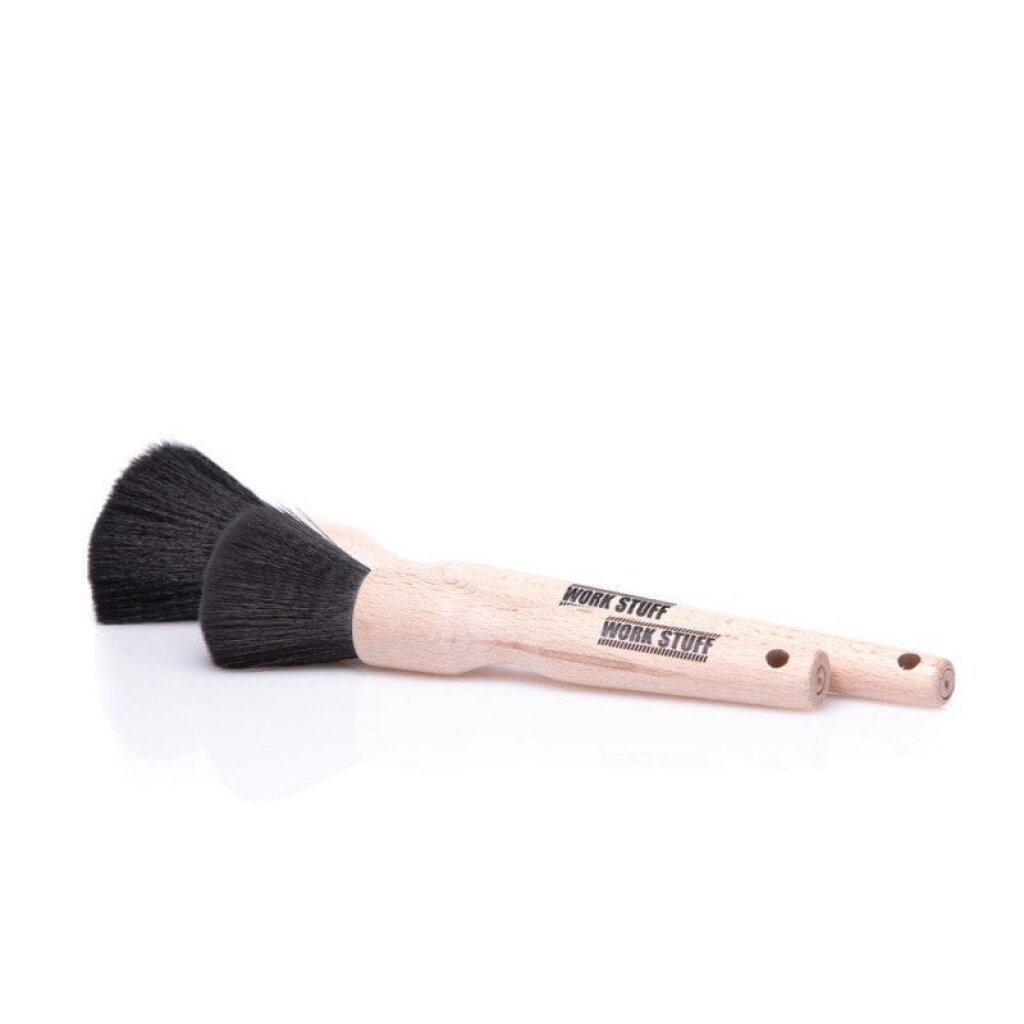
- The WORK STUFF Detailing Brush CLASSIC has bristles that Work Stuff describes as both sturdy and soft enough to be used on any surface. It is sold in 16, 24, 30 and 40 mm sizes and is used on rims, in prewash and on car interiors. The bristles absorb chemicals to a large extent, so you can distribute more product onto the area.
- The WORK STUFF Detailing Brush Rubber Classic is the same idea with a rubber handle, which is better for cleaning recessed areas because it reduces the risk of bruising the paintwork. It comes in 16, 24 and 30 mm sizes.
Stiff brushes for tough jobs
- The WORK STUFF Detailing Brush BLACK is built for high cleaning power on rims, sills, recessed areas, engine chambers and car interiors.
- The WORK STUFF Detailing Brush STIFF has the hardest bristles and the greatest cleaning power in the range, made of PET that resists strong chemicals. It is meant for particularly stubborn dirt and any work with the strongest chemicals.
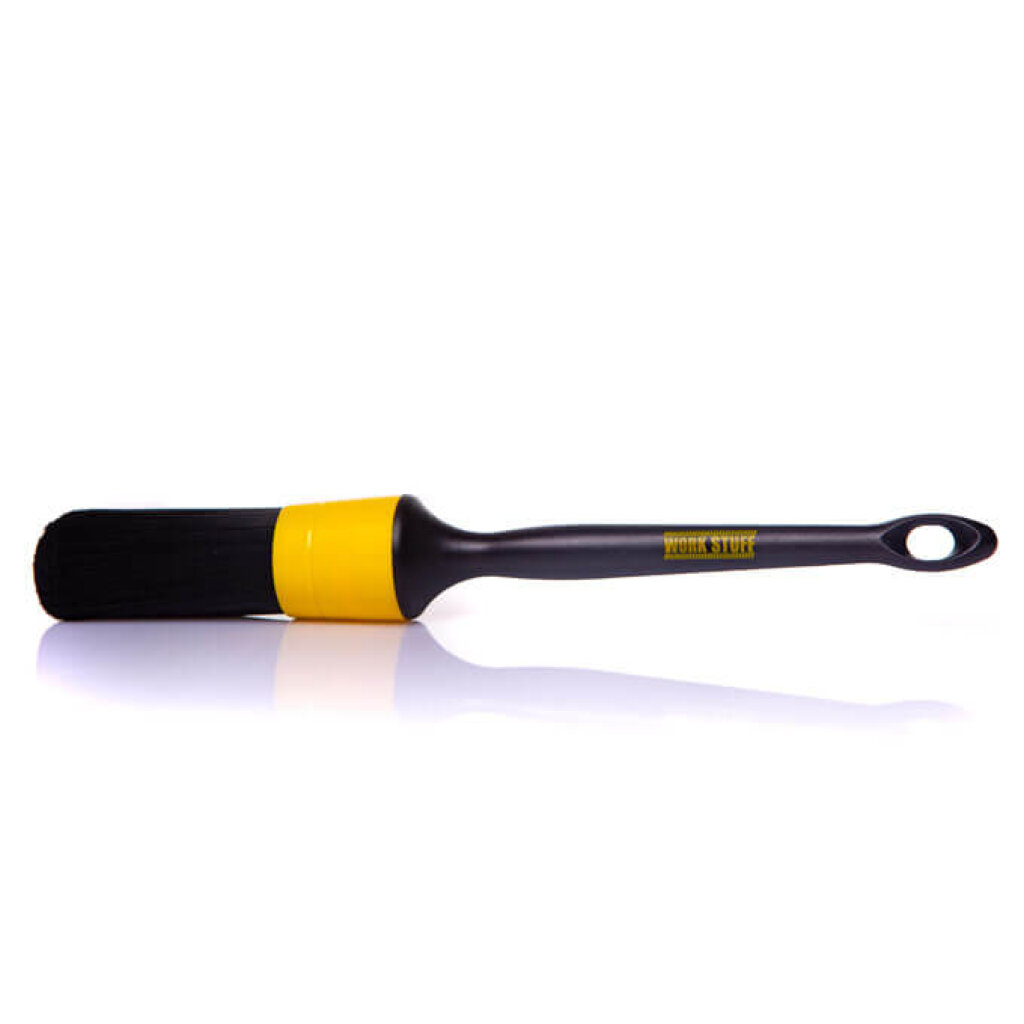
Important: Work Stuff states that the Black and Stiff brushes should not be used on scratch-prone elements such as car bodies, piano black elements, piano black rims or gloss black finishes.
Natural-hair brushes for fine detail and leather
- The GreenZ Boar’s Hair Detail Brush 1 inch is 1 inch in size and made from soft boar’s hair for brake calipers, the gaps between emblems and other hard-to-reach delicate areas. GreenZ states that the genuine boar’s hair means no surface, including paint, is scratched or marred.
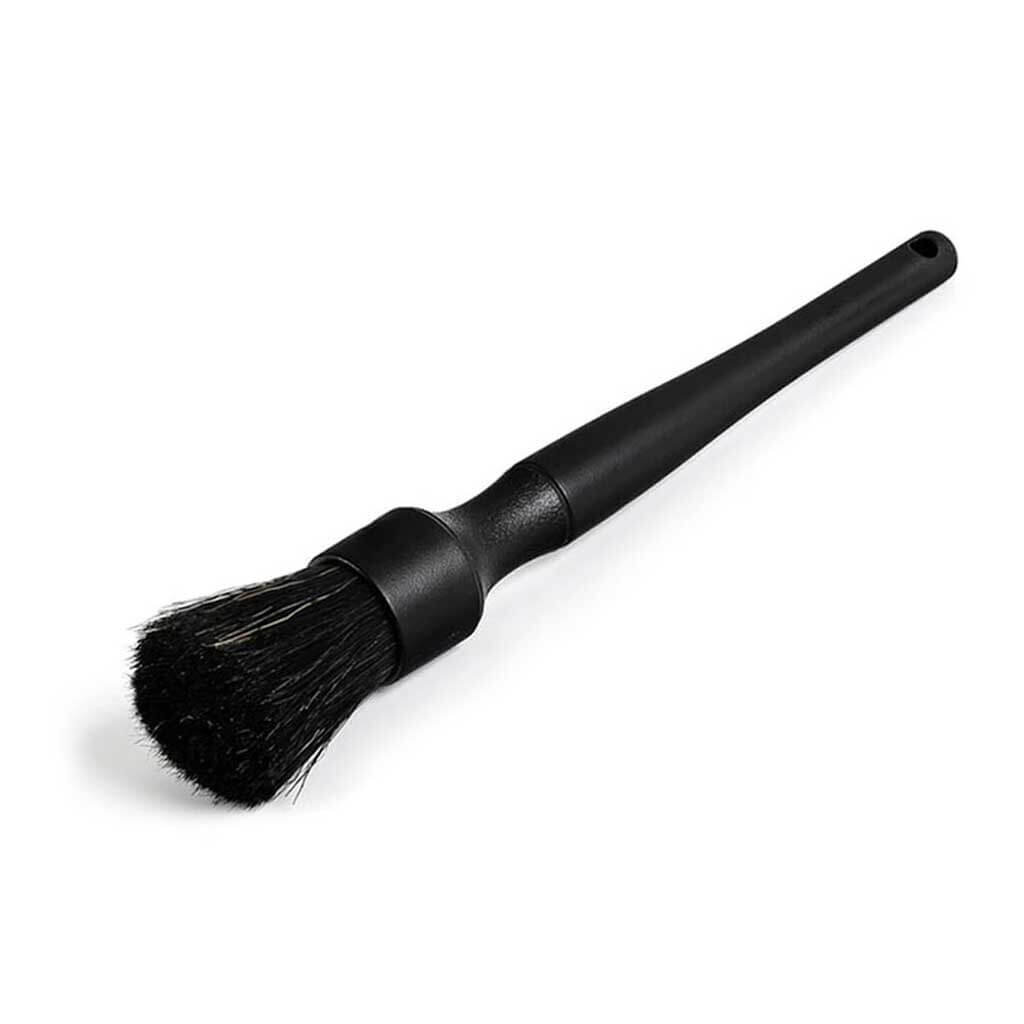
- The GreenZ Natural Horse Hair Interior Detail Brush is a slim, soft, all-natural brush for the nooks and crannies of an interior that other brushes cannot reach.
- The GreenZ Natural Horse Hair Leather Cleaning Brush has thousands of genuine horse hair bristles that gently clean leather, vinyl, cloth and plastics, loosening soil and agitating the leather’s pores to release body oils.
- The WORK STUFF Handy Leather Brush uses a blend of 30% natural and 70% synthetic bristles chosen to be efficient and delicate on leather.
Specialist brushes
- The GreenZ Auto Vent Brush cleans dust from AC vents, door pockets, the glove box and the centre console.
- The GreenZ Heavy-Duty DA Carpet Brush is a 5 inch brush that attaches to a dual-action polisher’s backing plate by hook and loop, turning the polisher into a carpet and upholstery scrubber. GreenZ states it can cut carpet-cleaning time by up to 90%.
- The Mothers Detail Brush Set gives you two identical extra-soft brushes with a rubber seam-cleaning tip, so you can use one inside the car and one outside to avoid cross-contamination.
For wheels, see our guide to cleaning wheels and tyres.
Quick guide: which brush for which job
- Prewash and rims: Classic, Grey or Rubber Classic.
- Stubborn dirt, engine bays and arches: Black or Stiff, kept away from paint.
- Leather and steering wheel: Albino, Grey, a natural-hair leather brush or the Handy Leather Brush.
- Emblems, calipers and gaps: the Boar’s Hair brush.
- Vents: the Auto Vent Brush.
- Carpets and mats: the DA Carpet Brush.
Use brushes with the right cleaner
A brush spreads and agitates the cleaner, so match the two. Our APC dilution guide explains how to mix a cleaner for each surface, and our starter kit guide shows which brushes to buy first. Keep brushes used for dirty jobs separate from the ones you use inside the car.
Frequently Asked Questions
Which detailing brush is safe on paint?
Use a soft brush on anything scratch-prone. Work Stuff states that its Black and Stiff brushes should not be used on car bodies, piano black elements, piano black rims or gloss black finishes, so reach for an Ultra Soft, Albino or boar's hair brush near delicate surfaces.
What is the difference between soft and stiff detailing brushes?
Stiffness. Stiff brushes, such as the Work Stuff Stiff with its hard PET bristles, have the greatest cleaning power for stubborn dirt and strong chemicals but can scratch delicate surfaces. Soft brushes like the Ultra Soft or Albino have very dense, delicate bristles for interiors, leather and prewash.
Why do some detailing brushes have a rubber handle?
A rubber handle is better for cleaning recessed areas because it reduces the risk of bruising the paintwork. The Work Stuff Rubber Classic brush has the same bristles as the Classic but with a rubber handle.
Which brush should I use on car leather?
Use a soft brush made for it. Work Stuff recommends its Albino and Grey brushes for leather elements, and GreenZ's natural horse hair leather brush has thousands of horse hair bristles that gently clean leather, vinyl, cloth and plastics. The Work Stuff Handy Leather Brush uses a blend of 30% natural and 70% synthetic bristles.
Should I use the same brush inside and outside the car?
It is better not to. Keep brushes used for dirty exterior jobs, such as wheels and engine bays, separate from interior brushes. The Mothers Detail Brush Set includes two identical brushes so one can stay inside and one outside to avoid cross-contamination.