How Many Layers of Ceramic Coating Do You Need? Base Coat vs Topcoat Explained
“How many layers?” is one of the first questions customers ask about a ceramic coating, and the market has made it harder to answer by turning layers into a selling point. Some brands talk about 8 to 12 layers as if more must mean better. It does not. This guide explains what layers actually do, when a topcoat makes sense, and what matters more than the count.
The short answer
Most ceramic coatings can be layered, but the useful limit is about 3 to 4 layers. Going beyond that is a waste of product and money. And many modern coatings are designed so that a single layer is all you need. What you want on the paint is a coating of proper thickness, applied well to properly prepared paint, not a record number of coats.
Why layers stop adding value
A coating bonds to the paint at a molecular level. In our explanation, after about 3 to 4 layers there is little left on the paint surface for further layers to bond to, so additional layers add little or no benefit to the paint while adding cost. The point is thickness: how much coating you really get on the paint. More layers only help if they build meaningful thickness, and layering is often used as a marketing gimmick. We cover the wider story in our article on the over-hypes around ceramic coating, including 9H claims and lifetime warranties.
Coatings built for a single layer
Newer formulations are engineered to deliver their protection in one layer.
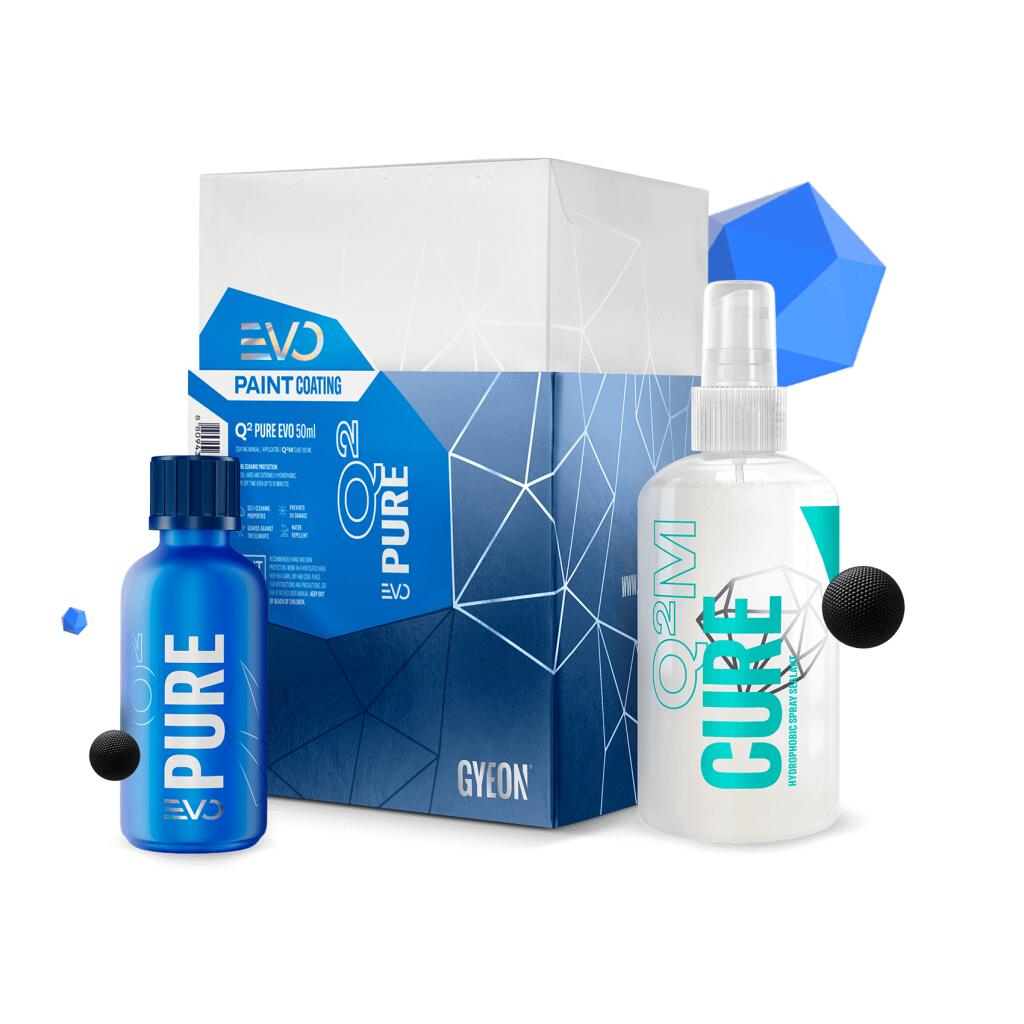
- The GYEON Q² PURE EVO Kit is a thick, glossy, one-layer coating. GYEON says its thick formulation requires only one layer, which makes application quick, and that it builds a very thick layer that is fully functional and durable on its own.
- The GYEON Q² MOHS EVO Kit changed from its predecessor: the classic Q² Mohs was a multilayer product, while the EVO version allows a straightforward one-layer application. GYEON states that 30 ml of the EVO formula equals at least 50 ml of the retired product.
- The Nanolex Si3D Ceramic Coating adds a clear layer several microns thick, and Nanolex states that only one layer is required. It is applied at 5 to 30°C, away from direct sunlight and high humidity.
Note that GYEON lists Q² Mohs EVO and Q² Syncro EVO as available only to approved ceramic coating professionals. Check each product page for who it is sold to.
Base coat and topcoat: a different idea
A topcoat is not the same as extra layers of the same coating. It is a second, different product with a different job. The clearest example is the GYEON Q² SYNCRO EVO Kit, a two-stage system. The base coat, Q² Mohs EVO, provides hardness and durability. The Q² Skin EVO topcoat is applied over it to increase gloss and the durability of the hydrophobic effect, and it also gives strong colour enhancement that is easy to see on dark paint.
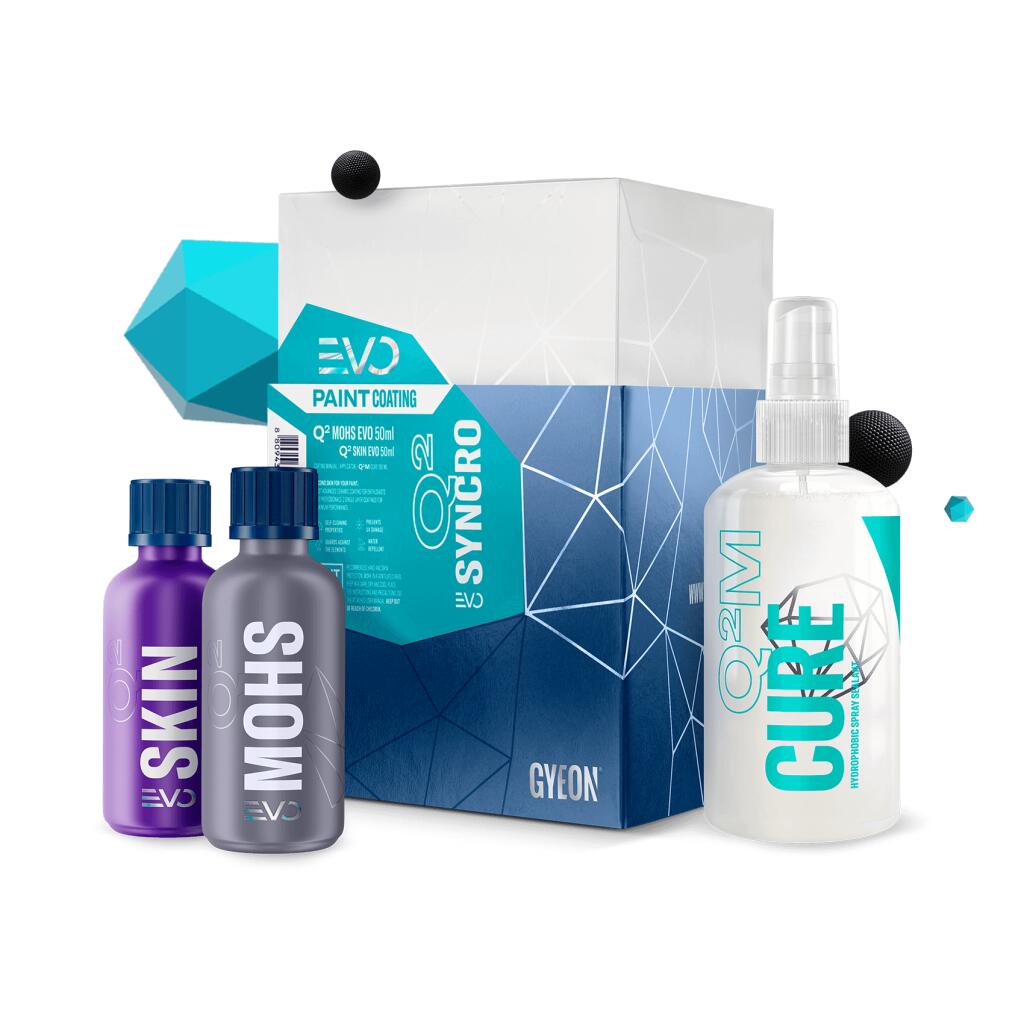
So the question is not “how many layers” but “what does each stage add”. A single-layer coating suits a car that needs solid protection with a simple process. A base coat and topcoat system suits a customer who wants maximum gloss and long-lasting hydrophobics, and is happy to pay for a longer process. GYEON’s guide on our site notes that Pure EVO is rated for up to 36 months, and that Syncro offers longevity exceeding two years with proper maintenance. See our GYEON ceramic coating guide for the range.
What matters more than the number of layers
- Preparation. Surface preparation directly affects durability. Correct defects first, and use oil-free, filler-free polishes before any coating, because oils and fillers stop the coating bonding to the paint. The GreenZ XtremeCut Compound 350 and GreenZ Ultra Finish Polish 4500 are formulated with zero silicon fillers and a low-oil formula for exactly this reason.
- Application. Follow the manufacturer’s process closely. For the GYEON coatings above, the coating should not get wet in the first 12 hours after application, and the choice of towels for wipe-off matters, especially with a thick coating like Pure EVO.
- Maintenance. Even the best coating needs a pH-neutral wash routine and periodic top-ups. A coating that is not maintained will not last.
- The installer. A coating that is not applied properly or maintained will not last more than a few months, whatever the layer count.
How to decide
- If a seller promises 8 to 12 layers, ask what thickness it builds and what the manufacturer’s process says. Counting layers tells you little.
- If you want simple, durable protection, choose a single-layer coating applied by someone who follows the process.
- If you want maximum gloss and are willing to pay for a longer process, consider a base coat and topcoat system.
- Whatever you choose, budget for correction and preparation, because they decide the result. See our guide to ceramic coating prices and costs to understand what drives the quote.
For the basics of what a ceramic coating is and how it compares with waxes and sealants, read what is ceramic coating and waxes, sealants and coatings.
Frequently Asked Questions
How many layers of ceramic coating should I apply?
Most ceramic coatings can be layered up to about 3 to 4 layers; going beyond that is a waste of product and money. Many modern coatings, such as GYEON Q² Pure EVO, GYEON Q² Mohs EVO and Nanolex Si3D, are designed to need only one layer.
Do 8 to 12 layers make a ceramic coating last longer?
No. After about 3 to 4 layers there is little left on the paint for further layers to bond to, so extra layers add little or no benefit to the paint and only add cost. What counts is the thickness you actually get, and layering is often used as a marketing gimmick.
What is the difference between a base coat and a topcoat in ceramic coatings?
A topcoat is a different product with a different job, not just another layer of the same coating. In the GYEON Q² Syncro EVO system, the Q² Mohs EVO base coat provides hardness and durability, and the Q² Skin EVO topcoat increases gloss and the durability of the hydrophobic effect, with strong colour enhancement on dark paint.
What matters more than the number of layers?
Preparation, application and maintenance. Correct paint defects first and use oil-free, filler-free polishes so the coating can bond, follow the manufacturer's application process closely, and keep the car on a pH-neutral wash routine. A coating that is not applied or maintained properly will not last more than a few months.
Can I apply GYEON Q² Mohs EVO or Syncro EVO myself?
GYEON lists Q² Mohs EVO and Q² Syncro EVO as available only to approved ceramic coating professionals. Check the product page for who it is sold to.