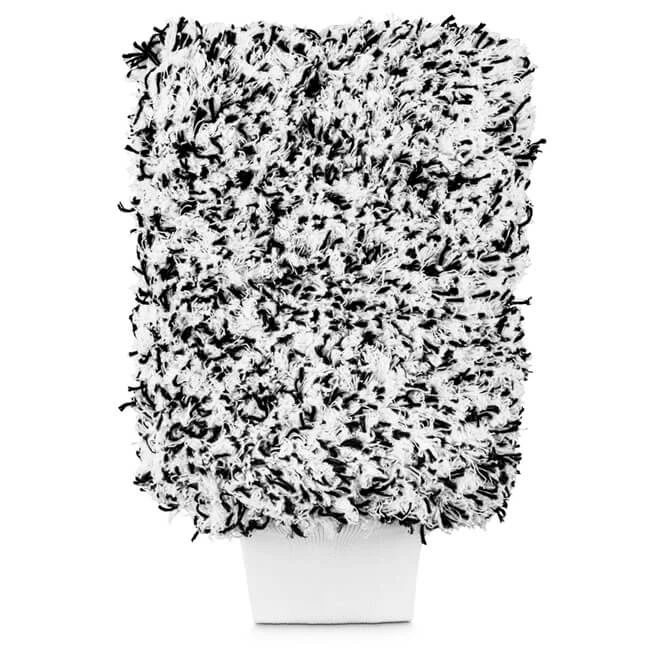
How to Choose a Car Wash Mitt: Microfiber, Chenille, Wool or Sponge
Most wash scratches do not come from the shampoo. They come from what touches the paint. A good car wash mitt holds grit away from the surface and carries plenty of soapy water, while a cheap sponge can drag dirt straight across the clear coat. This guide compares microfiber, chenille, wool and sponges, explains how many mitts you need, and shows how to look after them.
Why the wash mitt matters
Every panel you wash has fine dust and grit on it. A safe wash tool does two things: it lubricates the paint with lots of shampoo solution, and it lets loose dirt move up into its pile instead of staying trapped at the contact face. Flat, dense surfaces such as household sponges cannot do either well, which is why they are linked with swirl marks.
Step 1: Prepare the car before the mitt touches it
Rinse the car thoroughly to remove as much loose dirt as possible, and always wash out of direct sun. Mix your shampoo following the label. A mitt is only as safe as the amount of grit left on the car when you start, so never skip the rinse.
Step 2: Choose your wash mitt type
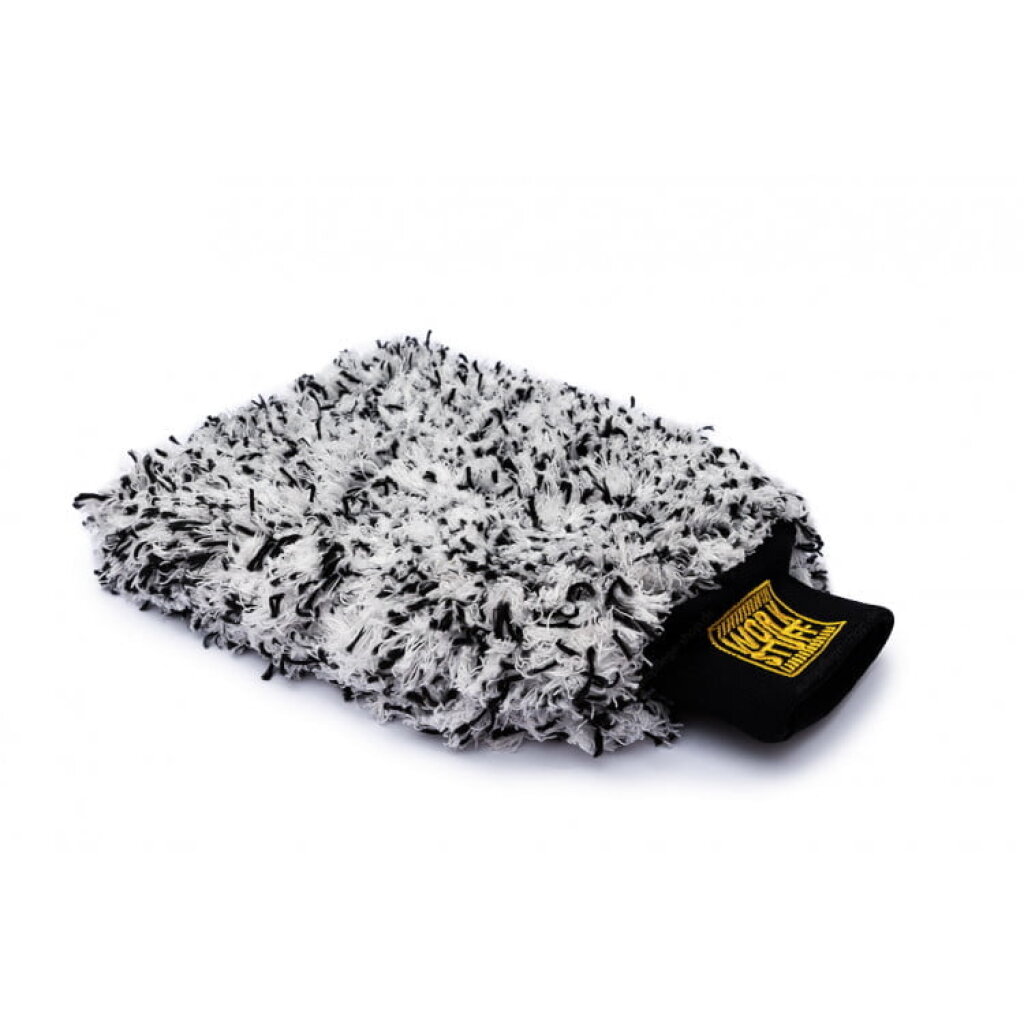
Microfiber wash mitts
Microfiber mitts are soft, absorbent and suit most cars. The GreenZ Superior Microfiber Wash Mitt uses Korean microfiber with extra deep pile strands and a thick foam core; the listing says it holds high levels of shampoo suds and suits foam, bucket and rinseless washing. It has an elasticated cuff for grip. The WORK STUFF STORM Wash Mitt is a dense, delicate Korean microfiber mitt measuring 22 by 18 cm with a large cleaning surface.
Micro-chenille wash mitts
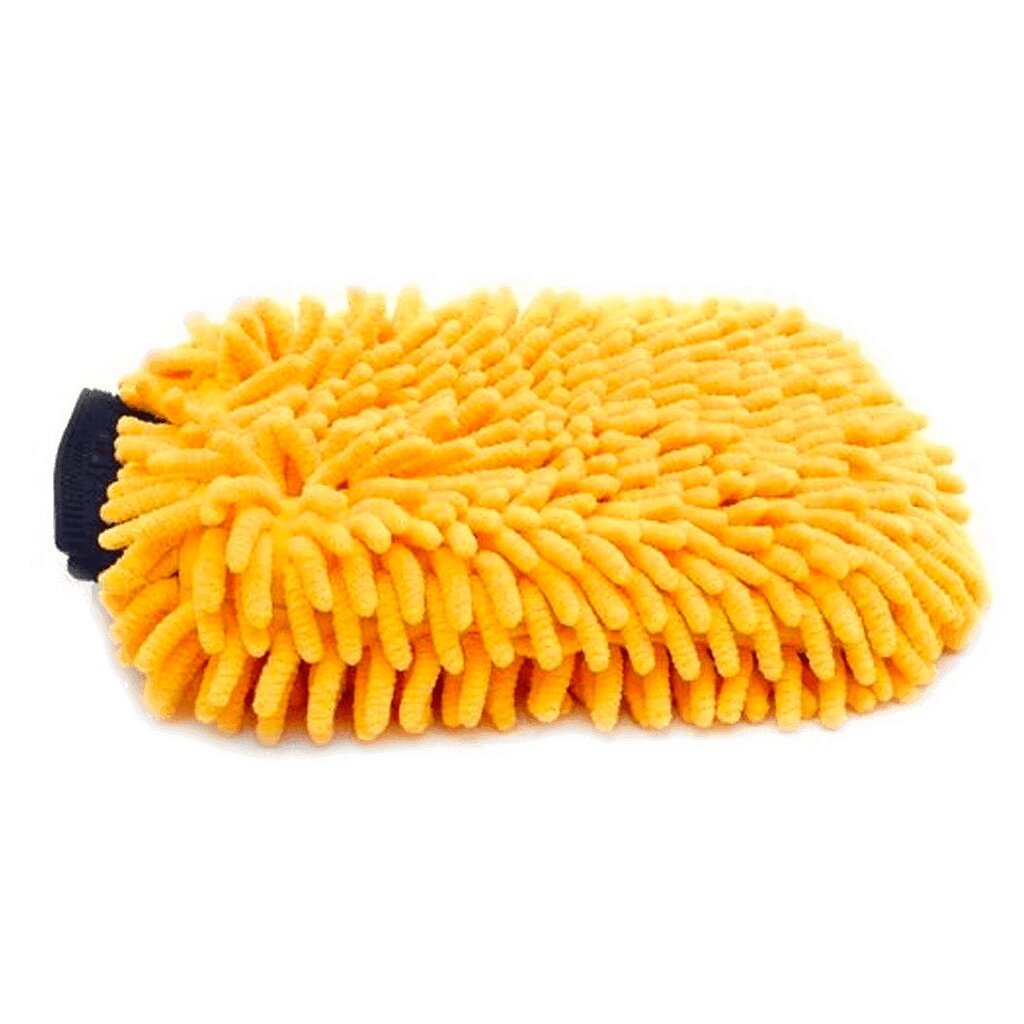
Chenille mitts have plush finger-like strands made of many fine microfiber threads bunched together. These strands hold a lot of soapy water and give dirt somewhere to go. The GreenZ Supreme Micro-Chenille Wash Mitt has, according to the listing, 40% larger microfiber fingers than the standard GreenZ micro-chenille mitts, and it is made for the two bucket method.
Wash pads for larger panels
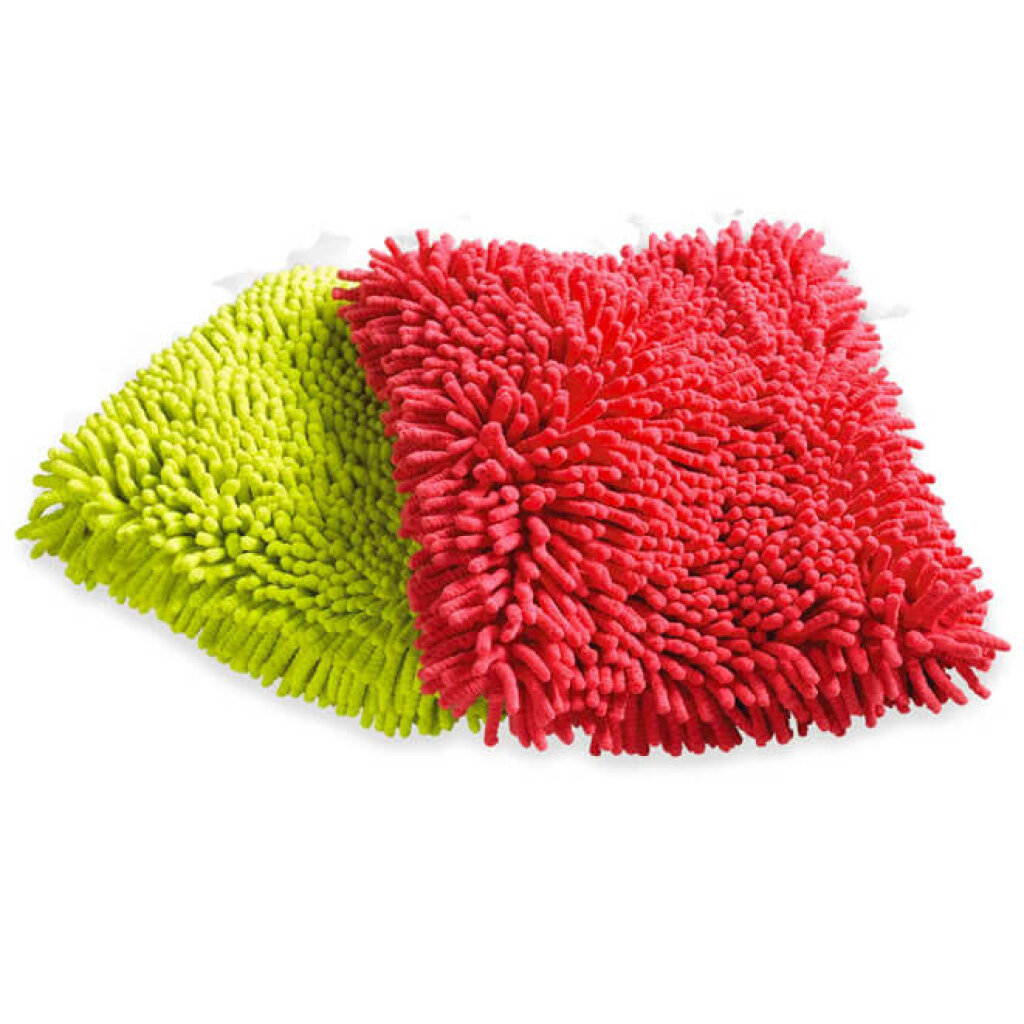
A wash pad works like a mitt you hold rather than wear, with a broad face for roofs, bonnets and doors. The GreenZ Premium Micro-Chenille Wash Pad is a large chenille pad with plush strands. The WORK STUFF Typhoon Wash Pad is made from dense, delicate microfiber with an ergonomic shape that stops it slipping out of your hand, and a large washing area that speeds up the job.
Wool, lambswool and sponges
Lambswool mitts are very soft but need more careful drying and storage than microfiber. Ordinary sponges trap grit against their flat face, so we do not recommend them for paint.
Step 3: How many mitts and how to use them
- Use at least two: one for upper panels and one for the dirtier lower sills, bumpers and rear.
- Keep a separate tool for wheels; never let a wheel mitt touch paint.
- Wash top to bottom in straight lines with light pressure, and rinse the mitt often.
- If you drop a mitt on the ground, stop using it until it has been washed.
How to care for your wash mitt
- Wash new mitts before first use, as both WORK STUFF listings recommend.
- After each wash, rinse out all shampoo and grit, then machine wash with microfiber-safe detergent and no fabric softener.
- Air dry and store in a clean, closed bag away from dust.
- Replace a mitt once its pile is matted or it feels rough.
Which one should you choose?
- Everyday all-rounder: a deep pile microfiber mitt.
- Maximum suds and grit space: a micro-chenille mitt.
- Large or tall vehicles: a wash pad for wide panels.
- Avoid household sponges on paint.
Pair your mitt with the right shampoo using our guide to choosing a car shampoo, and dry safely with the right towel from our microfiber towel types guide.
Frequently Asked Questions
Is a microfiber or chenille car wash mitt better?
Both are safe. Deep pile microfiber suits most cars, while micro-chenille has plush strands that hold a lot of soapy water and give dirt room to move away from the paint.
How many wash mitts do I need?
At least two: one for the cleaner upper panels and one for the dirtier lower areas, plus a separate tool kept only for wheels.
Can I use a sponge to wash my car?
We do not recommend it. A flat sponge can trap grit against the paint and drag it across the surface, which leads to swirl marks.
Should I wash a new wash mitt before using it?
Yes. Washing a new mitt before first use is recommended, and it removes any loose fibres or residue from manufacturing.
When is a wash pad better than a mitt?
A wash pad has a broad face that covers roofs, bonnets and doors quickly, which helps on larger vehicles. A mitt gives more control around curves and trim.